
21/10/2026
Does the Label Withstand Cooling? Here's What You Need to Check
Does the Label Withstand Cooling? A Practical Guide for Refrigerated Products
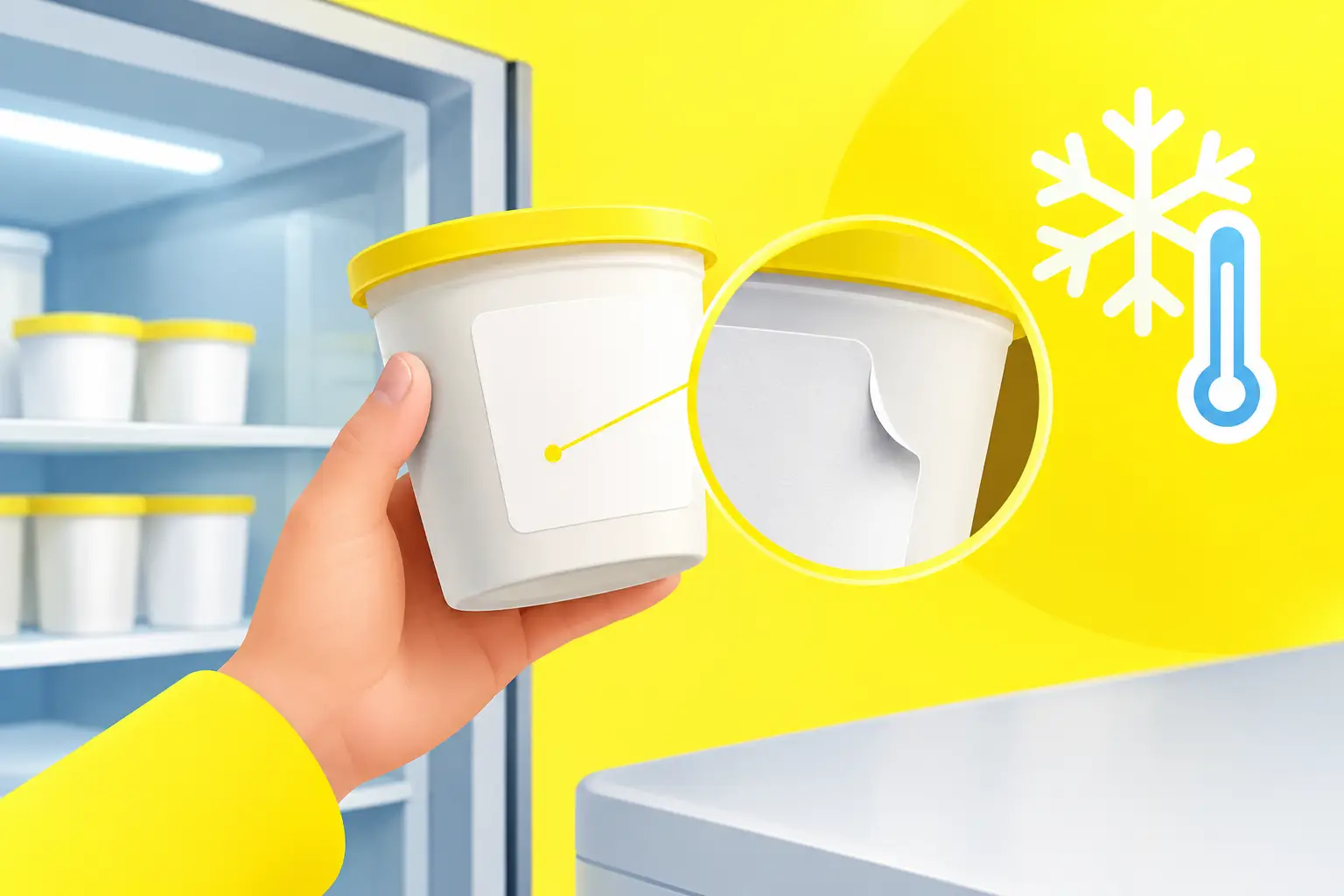
A label curling up in a refrigerated display case is more than just an aesthetic error. The product becomes harder to identify, the brand image can suffer, and the label may even peel off the packaging entirely. The question, then, isn't simply whether the label withstands cooling, but also at what temperature it's applied, to what surface it's adhered, and whether it's exposed to moisture or condensation. The good news: with the right materials, labeling refrigerated products can be solved reliably. However, to make the right choice, you need to distinguish between refrigerator storage, freezing, and the particularly demanding situation when cold packaging enters a warm, humid environment.
The Short Answer: Yes, But Not Every Label Is Equally Suitable
A label used on refrigerated products must perform in three areas: the material must not soften or wrinkle, the print must remain legible, and the adhesive must hold on the packaging. Most problems don't come from storage at 2-8 °C itself. Rather, they stem from moisture—condensation appearing on the bottle or box surface—or from adhering to a surface that's too cold. A label can be durable in a refrigerated environment while the same label adheres poorly if the packaging is wet or frosted at the moment of application. That's why two data points should always be treated separately: the label's operating temperature (how cold it can remain usable) and the minimum application temperature (which determines whether the adhesive can form a proper bond with the product surface).
The Right Material for Cooling: The Advantage of Film
For chilled beverages, dairy products, fresh foods, cosmetics, and other moisture-exposed products, a vinyl-based label is generally the safer choice. This material is waterproof, flexible, and less sensitive to moisture than traditional paper labels. Paper labels can work in certain cases with dry, chilled storage—for example, on closed cardboard boxes or secondary packaging that doesn't come into direct contact with moisture. However, on glass, plastic jars, or bottles where condensation is regular, paper edges can more easily become waterlogged. The label may then appear wavy and worn-out even if the print is still legible.
Vinyl labels work well in both glossy and matte finishes. The glossy surface provides a vibrant, high-contrast appearance, making it common on beverage bottles and promotional packaging. The matte finish is more understated, creates a premium effect, and shows fingerprints less. The cooling performance is primarily influenced not by this choice but by the material-adhesive combination and application conditions.
When Is Lamination Justified?
Lamination provides an extra protective layer for the print. It's particularly useful when the label experiences regular friction—for example, during crate shipping, frequent handling, or movement in refrigerated displays. It can be a good choice for beer and soft drink bottles, delicacy products, and brands where the label's appearance is an important part of the purchasing experience. However, lamination alone doesn't solve adhesion problems. If the packaging surface is wet, oily, or dusty, even the strongest surface protection can't compensate for inadequate preparation and adhesive.
The Adhesive Works Well When the Surface Is Right
Label adhesive doesn't reach full bonding strength immediately. After application, time is needed for the adhesive to "settle" properly into the surface's microscopic irregularities. That's why freshly labeled products shouldn't be placed in extreme cold environments right away if the manufacturing process allows otherwise. For best results, the packaging should be clean, dry, and ideally at room temperature before labeling.
On glass and plastic surfaces, a common problem is dust, oil, or moisture left over from manufacturing. These can be invisible yet still significantly reduce adhesion. For chilled bottles, it's practical to apply labels before cooling. If this isn't feasible, an adhesive designed for low application temperatures is necessary. This is especially important for producers who label already-chilled beverages, prepared meals, or refrigerated cosmetics.
Testing on Your Own Product Is the Most Reliable Method
Laboratory data is useful, but the final answer always comes from testing on your own packaging. Label a few sample pieces the same way you would in normal production. Let them bond properly, then refrigerate for at least one or two days. Afterward, examine the edges, corners, and print surface. Remove one piece to room temperature, watch for condensation, and check again a few hours later. If the product might experience friction during transport, it's worth modeling this too: a few bottles or jars next to each other in a box, moved around, will clearly indicate whether lamination is warranted.
For food products, label placement and compliance with applicable regulations are separate questions. The label's material, ink, and adhesive aren't automatically the same as materials that come into direct contact with food. Therefore, design the label for the outer surface of the packaging and also check the labeling requirements for your specific product category.
Refrigeration, Freezing, and Condensation: Not the Same Load
Refrigeration is generally manageable for a quality vinyl label. Freezing is a stricter requirement, as very low temperatures can affect the adhesive's flexibility and adhesion. For frozen products, always choose label material and adhesive whose manufacturer's specifications explicitly permit this use. The most challenging situation often involves temperature changes. Think of a glass removed from a refrigerator at a summer market: moisture quickly appears on the surface, then water droplets form. The label must remain flat in this humid environment, and the adhesive must not let go. That's why it's worth considering the actual use, not just the storage temperature. A craft beer label on a bottle sold from an ice chest at an event faces different stress than one stored in a dry refrigerated warehouse. A refrigerated specialty honey label placed on glass, a plastic jar, or a cardboard collection packaging faces different requirements depending on the substrate.
The Packaging Material Also Matters
Glass is typically easy to label when clean and dry. Smooth PET and most rigid plastics are also favorable surfaces, but low surface energy plastics—such as certain polypropylene or polyethylene packaging—require greater care. Standard adhesives struggle to grip these materials. Shape also plays a role. On a cylindrical bottle, an overly large, rigid label's edges may strain, especially on small diameters. In such cases, the right size, rounded corners, and flexible vinyl help achieve lasting results. The label shouldn't touch deep ridges, steep rims, or sharp creases directly, as these points can lift its edges.
If the packaging is new, coated, or made from unusual material, test labeling is the safest decision. A small test can prevent having to re-label an entire short run.
Visit getstickerz.eu/#konfigurator to configure and order labels tailored to your refrigerated products.
Practical Decision for Refrigerated Products
If your product is stored in a refrigerator, handled by hand, and occasionally fogs up, a waterproof vinyl label is the most practical starting point. For regular mechanical stress, request laminated execution. Apply labels, if possible, on dry, clean, not ice-cold surfaces, then give the adhesive time to bond fully. At getstickerz.eu/#konfigurator, size, shape, vinyl finish, and lamination can all be adapted to your product's use, even for small quantities.
If you're uncertain about the surface or temperature load, a file check before production plus a sample test is a particularly sound investment. Visit getstickerz.eu/#termekek to explore our product options or getstickerz.eu/rolunk to learn more about our expertise.
A label does its job when the customer only sees the brand on it—not the technical decisions required to keep it perfectly in place when pulled from the refrigerator. For any questions about labeling your specific products, you can also reach out via getstickerz.eu/kapcsolat.