16/08/2026
How Long Does It Take to Make Custom Labels?
How Long Does It Take to Make Custom Labels?
When launching a new honey series, cosmetic product, or e-commerce packaging, the label is often the last—yet critical—item on your checklist. The question isn't just how long it takes to make a label, but which steps determine the total turnaround time. The answer depends most often on graphic quality, chosen finish, approval process, quantity, and shipping destination. A well-prepared, print-ready file typically starts production faster. If the label design needs changes or you need to approve a print preview, this naturally adds to the turnaround time. For reliable planning, account not just for production days, but the entire ordering process.
From Order to Shipment: The Complete Timeline
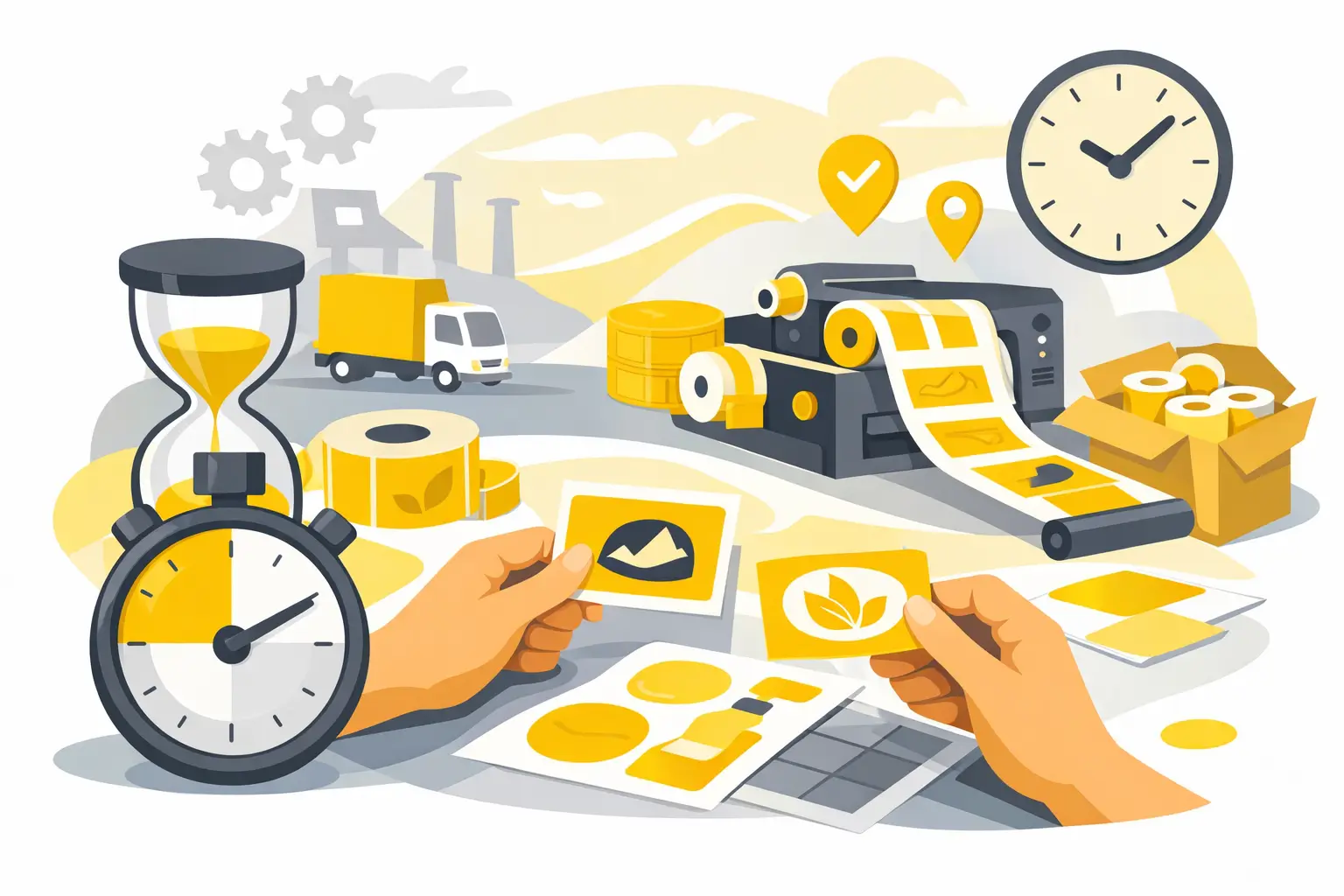
Label production isn't a single work phase. After your order arrives, the uploaded graphic must be verified, printing must be prepared, then manufacturing, cutting, quality control, and packaging follow. This is why two seemingly similar orders can have different lead times.
The fastest path is an order with properly sized, sharp, well-designed graphics, clear label parameters, and no need for follow-up coordination. In the online configurator at getstickerz.eu/#konfigurator, once you select your size, shape, material, finish, and quantity, manufacturing becomes precisely plannable. At GetStickerz, file verification happens within 24 hours, so technical issues are caught before printing begins.
There's an important difference between file verification and print approval. Verification catches technical errors—low resolution, too-narrow safety margins, or missing bleeds—before they become problems. Optional print preview is an additional checkpoint: production only continues after your approval. This may slightly lengthen the process, but it's worthwhile, especially for new packaging or your first branded label order.
What Affects Label Manufacturing Time?
Production speed depends mainly on how ready your order is when submitted. Print-ready graphics aren't just faster—they're predictable. Poor quality files, screenshots, or graphics requiring later changes need coordination instead.
The State of Your Graphic
A label is production-ready when its size matches your chosen product, text is readable, images have proper resolution, and sufficient bleeds surround the cutting area. For small labels this is particularly crucial: a poorly placed ingredient list, barcode, or QR code creates not just aesthetic but usability problems. If you're unsure about your file, don't upload it just hours before the production deadline. Ordering early gives room for technical review and potential corrections.
Material, Finish, and Format
Glossy or matte vinyl labels, laminated surfaces, and custom-cut shapes all require different manufacturing steps. Lamination is a good choice if your label faces moisture, cold, frequent handling, or outdoor use—but it's an extra work phase to factor into your timeline. When choosing between roll, fan-fold, or individually cut formats, don't only consider production time. Small artisan batches work well with fan-fold labels, while promotional giveaways or e-shop packages benefit from individually cut stickers for better user experience. The right format can also streamline your own packaging work.
Quantity and Seasonal Demand
Small orders starting from just 10 units let you avoid excess stock for a new product test or limited campaign. Larger quantities require more manufacturing capacity, cutting, and packaging to schedule. This doesn't mean bigger orders are necessarily slower, but signal your needs early if your project has a fixed launch date. Seasonality matters too. Holiday packaging, trade shows, product launches, and year-end campaigns see many businesses ordering labels simultaneously. If your product has a fixed market entry date, don't submit your order on the last possible day. Buffer time isn't luxury—it's part of inventory security.
Shipping Time Is Separate
Production completion doesn't mean the label is in your hands yet. Delivery within the EU varies by destination country, chosen carrier, shipment date, and local logistics load. Weekends, holidays, and peak seasons all affect delivery rhythm. So treat your order plan as three separate phases: file verification and approval, manufacturing, then shipping. If you calculate only manufacturing time, the label may be ready but not arrive in time for bottling, packaging, or campaign launch.
How to Speed Up Your Label Order
You can most influence speed through preparation. Before opening the configurator, have your exact label size, desired quantity, use case, and final graphic ready. Think about the surface too. Glass for refrigeration, oily cosmetic jars, or outdoor products need different materials than dry indoor packaging. Before submitting, check text, ingredients, dates, item numbers, and barcodes. A typo is simple to fix before production—already-printed labels mean reprinting.
The same applies to size: measure the surface to be labeled and leave proper distance from curves, edges, caps, or weld lines. If branding or product information might still change, don't order a huge batch. Smaller, flexible series let you test design and market reaction before committing to larger quantities.
Visit getstickerz.eu/#termekek to explore available materials and finishes that suit your needs.
When Should You Request Print Preview Approval?
Print preview is especially useful if you're ordering a new label for the first time, launching multiple product variants, or working with sensitive brand colors. It's also wise if the label contains legal or product information text that must be flawless. With urgent orders, you might skip this step for speed. This works if the graphic has proven reliable before and you're ordering the exact same finish again. For new designs, however, approval typically presents less risk than the time it adds.
Realistic Planning for Your Next Label Order
The exact answer to how long labels take is always assembled from your specific order details. A final, technically correct file, well-chosen material, and quick approval significantly shortens the path to finished labels. Buffer time for shipping protects your product launch from logistics delays derailing your entire schedule.
If labels must arrive for your next manufacturing, bottling, or packaging date, the best decision is to schedule not just production but the entire process. Then labels won't be a last-minute problem—they'll be a reliable, timely part of your brand.
For help designing your perfect label order, visit getstickerz.eu/rolunk to learn more about our team and expertise, or contact us at getstickerz.eu/kapcsolat with your questions.