
13/10/2026
How Long Do Outdoor Stickers Last? Material and Protection
How Long Do Outdoor Stickers Last?
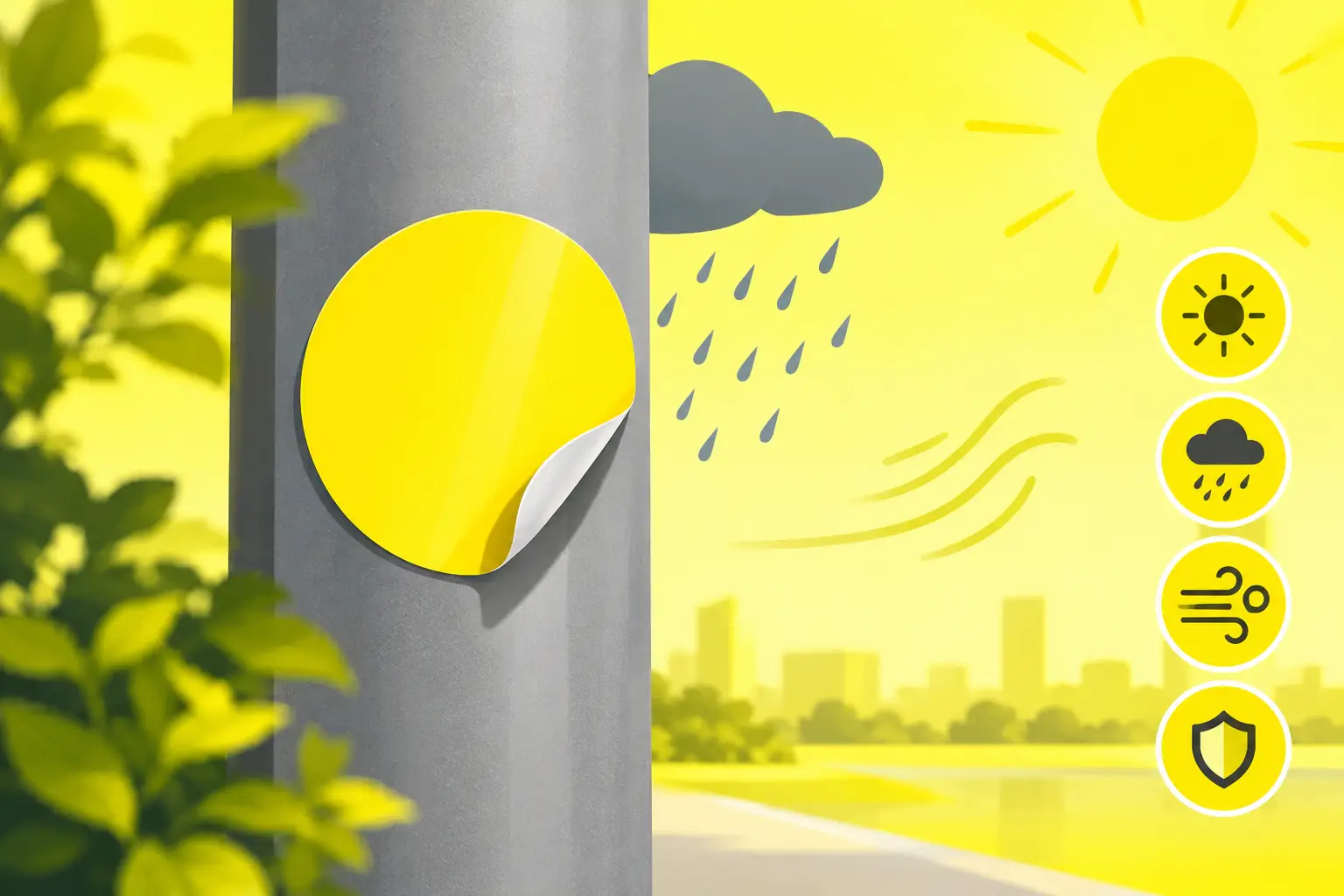
An outdoor sticker truly works for your brand when, months or years after application, the logo remains sharp, the information is readable, and the edges don't peel off. But how long does an outdoor sticker actually last? The short answer: a vinyl sticker made from the right material, printed properly, and applied to a well-prepared surface can typically be used for 3-7 years. However, the exact lifespan is not determined by a single factor. A sticker on a beekeeper's jar, a delivery box, a window display, or a company vehicle experiences completely different stress. Sunlight, precipitation, cleaning agents, surface material, and application conditions together determine how long it maintains a professional appearance.
How Long Do Outdoor Stickers Last Under Different Conditions?
For outdoor use, vinyl is the base material, not paper. High-quality adhesive vinyl is waterproof, more flexible, and handles temperature fluctuations better than indoor or paper-based labels. Under average European weather conditions, a premium vinyl sticker performs reliably for 3-5 years, and with lamination under favorable use, even 5-7 years of lifespan is realistic. This doesn't mean every sticker remains unchanged for the same length of time.
A south-facing storefront or vehicle side receives continuous UV exposure, so colors can fade faster. The same sticker on a covered terrace, mailbox, or less sunny facade generally maintains its appearance longer. The outdoor lifespan is also influenced by whether the sticker is applied to a flat or curved surface. On a smooth glass door or metal plate, mechanical stress is lower. On a bicycle helmet, water bottle, crate, bicycle, or strongly curved packaging, the edges experience greater stress, making proper adhesive and careful application particularly important.
Sunlight: More Than Just Color Fading
The greatest enemy of outdoor stickers is often UV radiation. Over time, this can fade the print, especially vivid red, orange, and yellow shades. The quality of pigments, printing technology, and protective layer all matter together. With a laminated sticker, the film provides physical protection for the print and slows color aging. Lamination isn't always mandatory, but it's strongly recommended if the sticker is intended for permanent outdoor use, on vehicles, frequently cleaned surfaces, or places with intense sunlight. Glossy lamination provides a brighter, shinier finish, while the matte version offers a more subtle appearance and less reflection. Both can be good choices from a durability perspective.
Rain, Frost, and Heat: The Adhesive Matters Too
A waterproof print alone doesn't guarantee the sticker will stay in place for long. For that, the adhesive must also resist moisture, heat, and cold. Outdoor vinyl stickers are designed for this, but the timing of application can be critical. On cold, damp, or wet surfaces, the adhesive cannot bond properly. Ideally, the sticker should be applied to a clean, dry surface at moderate temperatures. If strong rain, frost, or heat hits immediately after application, adhesion can be weaker, especially at the corners and fine details.
What Kind of Sticker Is Suitable for Outdoor Use?
When choosing, it's not enough to just specify that the sticker "needs to be outdoor-ready." It's worth thinking about where and how long it will be used. A seasonal promotional sticker requires different specifications than a permanent brand marking on a pickup truck or vending machine.
Waterproof vinyl is a good starting point for both shorter and longer-term outdoor applications. For logos, QR codes, event communication, packaging, window stickers, and equipment labeling, it's practical because it can be cut into various shapes. A custom contour-cut sticker can be an eye-catching solution, and curved cutting is advantageous when you want the sticker to be easier to remove and distribute quickly. When ordering, visit getstickerz.eu/#konfigurator to explore your options.
Sticker size also affects durability. On larger surfaces, there's more room for thermal expansion, so proper material and precise manufacturing are especially important for long, narrow, or highly detailed shapes. For small text and thin-line graphics, clear design is at least as important as the film itself.
When Is Lamination Justified?
Lamination is worth choosing if the sticker regularly experiences friction, gets washed, goes on handheld items, or is exposed to strong sunlight. Typical examples include vehicle stickers, outdoor signs, sports equipment, water bottles, tool boxes, and frequently disinfected surfaces. If the sticker is only for a short-term outdoor campaign lasting weeks or months, placed in a covered area, and not subjected to strong mechanical impact, vinyl without lamination may be sufficient. This is a more cost-effective solution, but it's always worth honestly comparing the expected usage time with environmental stress.
Five Minutes of Application Can Mean Years of Use
Beyond manufacturing quality, application determines whether the sticker's edges will peel prematurely. The surface must first be cleaned of dust and degreased. Glass, metal, and smooth plastic generally bond well, but silicone, waxed, porous, rough, or heavily textured surfaces present more risk. Before application, the object must be completely dry. It's worth marking the sticker's position in advance because repeatedly pulling back large self-adhesive material can damage the adhesive's performance. Smooth the film gradually from the center outward to leave as little air underneath as possible. After application, give the adhesive time to set. Final adhesion is not always immediate, so in the first 24-48 hours, avoid washing, rubbing, or exposing the surface to extreme weather. This seems like a small step, yet it can prevent many later complaints.
How to Keep Your Outdoor Sticker Looking Good
Sticker maintenance isn't complicated, but aggressive cleaning can shorten its lifespan. It can usually be safely cleaned with lukewarm water and mild cleaners. Strong solvents, abrasive cleaners, and hard brushes can wear down the lamination or print. On vehicles, high-pressure washers require special attention. Don't direct the water jet directly at the sticker's edge from close range, as this can break the adhesive bond. This applies even if the sticker is waterproof and laminated. Waterproofing doesn't mean mechanical stress is risk-free without limits.
What to Watch for Before Ordering?
Ordering a good outdoor sticker starts with a clear intended use. Think about what surface it will go on, how much sunlight it receives, how long it's expected to stay up, and whether extra wear resistance is needed. Based on this, you can more quickly select the optimal vinyl, surface treatment, size, and cutting style. For business use, file quality also matters. Proper resolution, well-separated colors, and sufficiently thick lines help ensure your brand marking stays crisp outdoors. In the GetStickerz ordering process, file checking and on-demand print preview reduces this risk, especially for first orders or new packaging graphics. Visit getstickerz.eu/#termekek to browse available options.
Lasting Results Through Proper Choices
A lasting outdoor result isn't a matter of luck: it's the combination of good material, justified lamination, precise graphics, and expert application. When these details are in place, your sticker doesn't just convey information—it reliably represents your brand for years, even in places where weather tests it every single day. For personalized guidance on your specific project, visit getstickerz.eu/rolunk or getstickerz.eu/kapcsolat to get in touch with experts who can help you choose the right solution.