04/11/2026
Kiss-Cut or Die-Cut Stickers: Which One to Choose?
Understanding the Choice Between Kiss-Cut and Die-Cut Stickers
A sticker on a product package is more than decoration: as a label, it carries information, and as a promotional tool, it builds your brand. The choice between kiss-cut and die-cut stickers therefore depends on how you'll use them, not just personal preference. One format works well for a gift sticker pack included with an online order, while another suits a customer who receives a single, immediately applicable logo sticker. Both can be made from the same high-quality, waterproof vinyl material, yet they deliver different experiences in hand, in packaging, and during use. Clarifying this difference before ordering will make it simpler to determine size, shape, and quantity. When you're ready to order, visit getstickerz.eu/#konfigurator to explore your options.
What Is a Kiss-Cut Sticker?
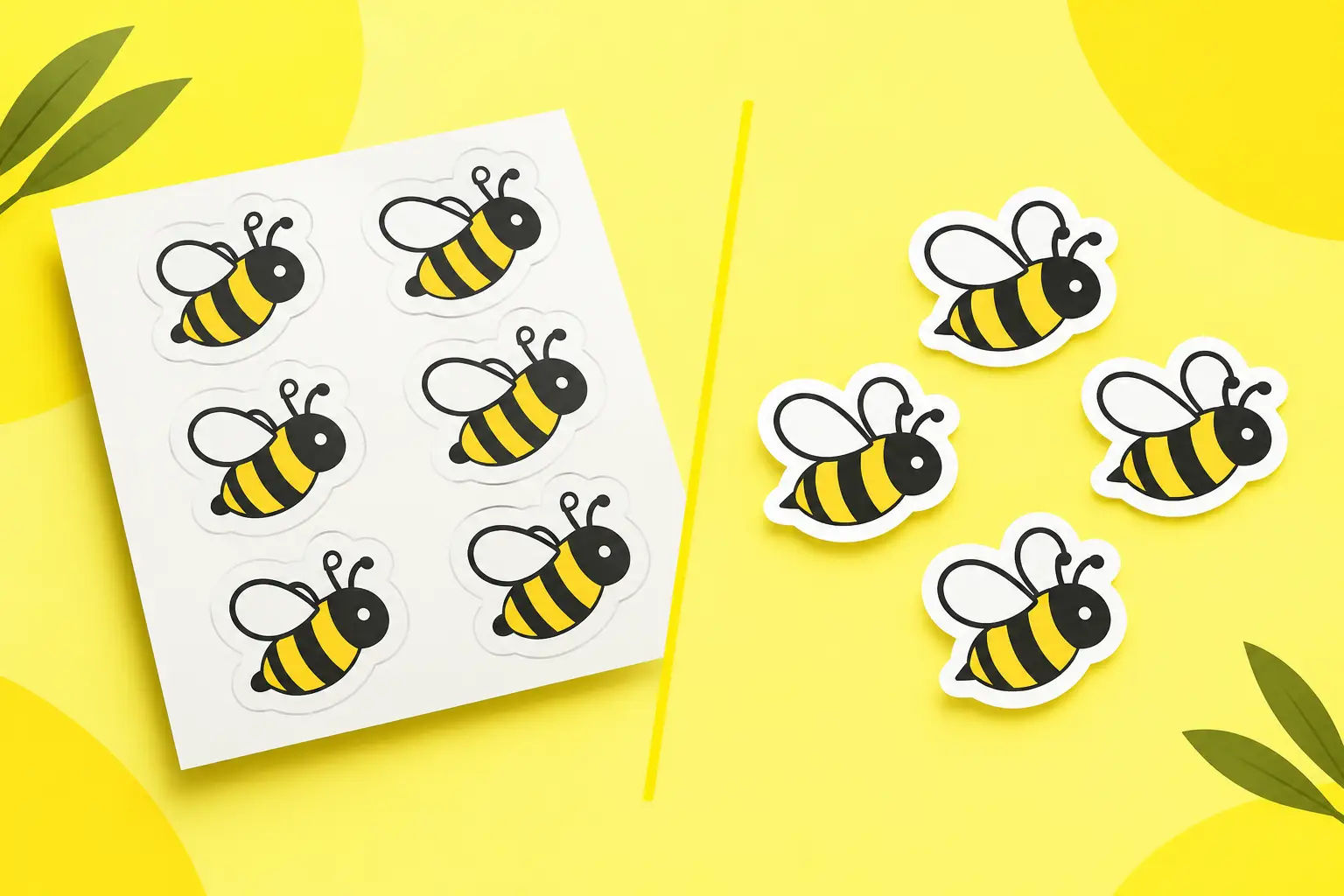
In kiss-cut application, the cutting machine only cuts through the top vinyl layer of the sticker, not the backing paper. The printed outline can therefore be completely unique—for example, a logo, mascot, product shape, or hand-drawn graphic—while underneath sits a larger, intact backing sheet. This backing can be square, rectangular, or another easy-to-handle shape. The key is that the user peels the sticker off the carrier. This solution is particularly practical for small, detail-rich, or narrow graphics, because the larger backing surface holds the sticker stable. The kiss-cut format is a good choice when you want to provide multiple stickers on a single sheet.
For example, a cosmetics brand might place a logo, product names, illustrations, and campaign messages on one sheet. The customer can then use these separately on a laptop, water bottle, packaging, or journal. This approach transforms the sticker experience into one of discovery and personal selection.
When Kiss-Cut Works Best
Kiss-cut stickers shine when choice and collection are part of the experience. They work well as gifts included with orders, as sticker packs for events, for creative products, or for smaller promotional series. The practical side is equally important. If your graphic is very small with fine contours, the backing paper helps with easier handling. This reduces the chance that the sticker will bend, stick to itself, or get damaged before application. The larger backing also provides space for brief instructions, a QR code, or your brand name if the print layout warrants it.
There is one trade-off, however: the user must first separate the sticker from the backing. This takes only a few seconds, but during mass distribution or quick giveaways, it's less direct than handing out individually cut pieces.
What Is a Die-Cut Sticker?
With die-cut stickers, the cut goes completely through both the vinyl layer and the backing paper. The result is a standalone sticker that follows the graphic precisely. If a beekeeping business uses a hexagonal honey jar logo, the finished piece follows that exact shape on the outside. There is no extra backing or sheet around it. This execution feels immediately complete and more premium, because the sticker itself is a well-presentable object to hand over. It can be distributed with a single motion at a market, placed in a package, or included as a promotional gift.
The distinctive outline captures attention even before someone applies the sticker. The die-cut solution is particularly suitable for strong logos, characterful illustrations, and campaigns where a single graphic takes center stage. A brewery's limited-edition label motif, a startup brand's mascot, or a band's emblem remains easily recognizable on its own.
When Die-Cut Excels
Choose this format when the unique outline is part of your message and you want to hand over stickers individually. This includes pieces for event distribution, influencer and partner packages, and unique gifts included with customer orders. Die-cut stickers also work well when you don't want unnecessary backing. A clean, larger logo is easier to handle, and the finished piece looks more polished in packaging.
That said, for very small graphics with many protruding elements, it's worth reconsidering the shape. In these cases, the kiss-cut backing offers more comfortable handling and greater protection.
Kiss-Cut or Die-Cut: Five Decision Points
To select the right format, it's worth starting with how you'll use the stickers rather than focusing on the graphic itself. The following five questions will quickly guide you toward the right decision.
Are You Handing Out One Sticker or Multiple Designs?
A single, standalone emblem typically calls for die-cut. With multiple smaller graphics, lettering, or variations, a kiss-cut sheet is more organized and economical.
How Detail-Rich Is Your Shape?
Broad, simple outlines work well in both formats. For thin lines, tiny elements, or narrow protruding parts, the kiss-cut backing provides safer handling.
Where Will Users Encounter Your Sticker?
At a checkout, festival, or during personal handover, die-cut is ready to use immediately. In a web shop package, as part of a creative bundle, or alongside product samples, a kiss-cut sheet offers more to explore and discover. Learn more about our product options at getstickerz.eu/#termekek.
What Quantity Do You Need?
Even for short runs, choose based on use, not solely on unit price. Starting from ten pieces, testing a new graphic or campaign carries lower risk, and later the same setup can be reordered in larger quantities.
What Surface Will the Sticker Be Applied To?
The cutting method doesn't replace material choice. For outdoor use, bottles, cars, tools, or refrigerators, waterproof, UV-resistant vinyl and, if necessary, lamination provide proper durability. A matte finish feels understated and premium, while gloss more vividly showcases colors.
The Print-Ready File Prevents Many Errors
A good sticker starts with your file. For unique shapes, ensure the cutting contour is clean and clearly distinguished, and maintain sufficient safety distance around important text and logo elements. Lines that are too thin, hairline strokes, and elements placed too close together will be less legible on a small sticker. If your sticker also serves as a product label, mandatory information must take priority.
For honey, cosmetics, beverages, or artisan food, verify that the size is sufficient for ingredients, storage data, barcodes, and brand identifiers. In this situation, a rectangular or circular label sometimes works better than a visually striking, heavily contoured die-cut shape. During the GetStickerz ordering process, checking your uploaded file helps catch technical issues before production. If you want to be certain with a new design or before a larger order, approving the print preview offers additional control. Visit getstickerz.eu/#konfigurator to see how our system supports your design choices.
Choosing Format Second, Not First
There is no universally better choice between kiss-cut and die-cut. Kiss-cut excels in versatility, handling fine details, and sticker packs. Die-cut performs best when a single graphic deserves attention on its own and the sticker functions as an immediately applicable, memorable object to hand over.
It's worth asking one question first: what do you want the recipient to do with your sticker? If they will select, collect, and use multiple elements, design a kiss-cut sheet. If you want to place a memorable shape in their hand, choose die-cut. After that, you'll be able to set the size, material, and finish much more confidently.
For expert guidance or custom needs, don't hesitate to reach out—visit getstickerz.eu/kapcsolat to contact our team or learn more about our services at getstickerz.eu/rolunk.