
14/05/2026
QR Code Sticker Production for Businesses
QR Code Sticker Production That Actually Works
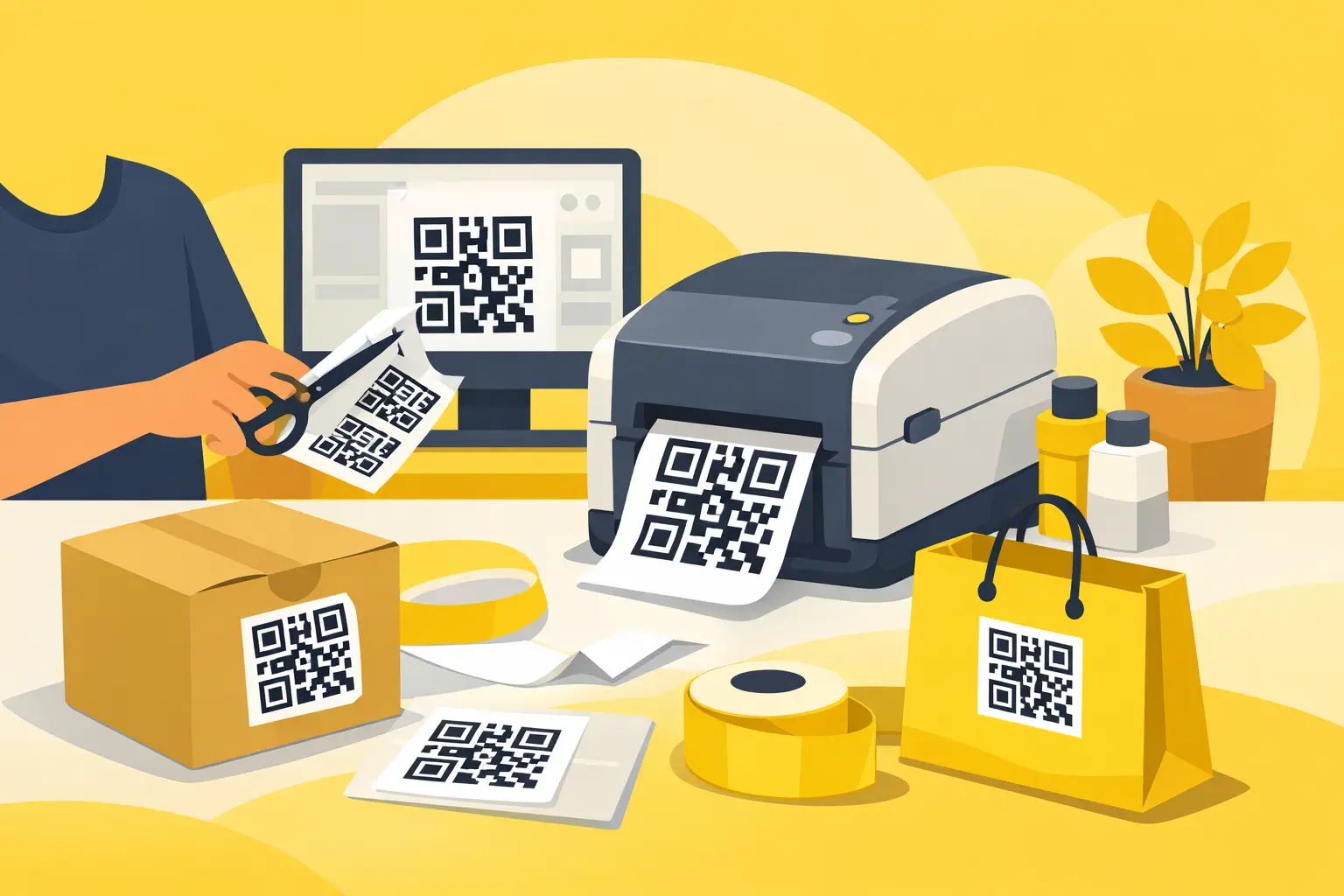
QR code sticker production only works well when the code is not just visually appealing, but scannable on the first try. This is the difference between a functional packaging element and a sticker that ends up being reprinted unnecessarily. Whether the sticker goes on a product, display, package, or promotional surface, the printing and usage environment matters just as much as the graphics themselves during design.
What's the Point of QR Code Stickers?
QR codes are no longer an extra feature—they're a practical tool. They fit in a small space and quickly direct users to websites, product pages, social media, instructions, menus, or custom campaign pages. For small businesses and product brands, this is especially useful because packaging and sticker surfaces are limited, yet you can convey much more information this way.
For honey producers, it works well when the code reveals product origin or the producer's story. For cosmetic brands, it's common to link to ingredients, usage tips, or reorder pages. Breweries, coffee brands, and small food companies find QR codes particularly practical for seasonal or limited editions, since you can provide fresh information without reprinting the actual packaging.
The right decision isn't whether to include a QR code on the sticker, but rather what size, material, and environment it should be designed for.
A Working QR Code Isn't Left to Chance
Many people treat QR codes like any other graphic element. From a printing perspective, that's a mistake. A logo can be subtle, a background can be more decorative, but a QR code must remain technically readable. If it's too small, too dense, has poor contrast, or ends up on a reflective surface, users simply won't scan it.
The most important factor is contrast. Black code on a light background remains the safest option. You can customize the appearance for your brand, but overly creative color combinations often come at the cost of usability. A light code on a dark background only works reliably in certain cases, and this should always be tested with multiple phones.
Size is equally critical. A simple URL-containing code can be printed smaller than a version carrying complex data. The more information in the code, the denser the pattern becomes, and the more space it needs. That's why businesses often benefit from using shortened URLs or links pointing to landing pages rather than very long URLs directly behind the code.
Which Materials Should You Print On?
Material selection for QR code sticker production isn't just an aesthetic question. If the sticker goes on glass, plastic, cardboard boxes, metal, or outdoor surfaces, the base material and surface treatment heavily influence durability and scannability.
Vinyl-based stickers are a good choice when water resistance, UV resistance, and general wear resistance are important. This is especially critical for beverage bottles, cosmetic packaging, refrigerated products, or packaging that's handled frequently. Paper-based stickers might be cheaper, but they deteriorate faster with moisture, rubbing, or extended use.
The surface finish also makes a difference between matte and glossy options. Glossy stickers look more impressive but can cause more reflection in strong light or in display windows, which reduces quick scanning. A matte surface is often the safer choice from this perspective. It's not always the winning option for every project, but if reliable readability is the priority, it's worth serious consideration.
Size, Shape, and Bleed: Where Printing Precision Matters
There must always be sufficient white space around a QR code. Many people forget this when designing graphics too tightly. Without proper quiet zone around the code, the phone camera struggles to distinguish the pattern from background elements. This is especially important for smaller stickers.
The shape can be custom, die-cut, or arranged on sheets, but the code shouldn't be placed too close to the cut line. Manufacturing is precise, but every print product has tolerances. If the code gets too close to the edge, even minimal misalignment can cause problems. The same applies if the sticker has rounded corners, is circular, or has a special shape.
With small product labels, you often need to compromise. The question isn't whether you can somehow squeeze in the QR code, but whether it will remain usable. If the label is too small, it's better to simplify the design or use a separate promotional sticker instead of cramming an unreadable code next to required information.
What Does Good QR Code Sticker Production Look Like?
Good results usually don't start at the printing stage—they start with file preparation. First, decide exactly what the code should do. A link for reorders needs different sizing and placement than a counter sticker or an outdoor display.
Next comes the graphics file. Don't place the QR code from a screenshot or low-resolution image. You need a clean, sharp source file with proper contrast and sufficient white space. Even if the sticker gets branded design, readability remains the first filter.
The next step is specification. Size, shape, quantity, material, surface, lamination, and cutting method together determine what the sticker will be suitable for. A short campaign doesn't necessarily need the same durability level as a permanent product label or outdoor use.
Pre-production checks prevent many errors. File verification within 24 hours or optional proof approval is especially helpful when creating new designs or when the QR code is critical to the customer journey. This filters out not just graphic errors, but practical issues like codes that are too small, poor contrast, or bad positioning.
Typical Mistakes That Lead to Reprints
One of the most common mistakes is a QR code that's too small. It looks fine on screen but becomes hard to read when printed. Another is poor background handling, when a pattern, texture, or color gradient gets too close to the code. It's also common to ignore the sticker's actual usage environment. What works under office lighting might not work on a shop window or outdoor surface.
Many businesses lose time and money by only looking at the per-unit price. But a cheaper sticker that doesn't work properly is actually more expensive. If the code isn't readable, if the sticker curls up, or if the print wears quickly, the entire order needs to be reprinted.
Who Benefits Most?
QR code stickers are particularly useful for businesses that want to convey more information in a small space and react quickly to campaigns or product changes. They work well on e-commerce packaging for encouraging reorders or requesting reviews. For craft brands, they can serve as added trust elements if the code leads to authentication or origin information.
With small and medium print runs, it's also an advantage that you don't need to order large inventories. If a product line is being tested or multiple variants are running in parallel, shorter print runs enable more flexible decisions. In this model, a provider like GetStickerz can be particularly advantageous because online configuration at getstickerz.eu/#konfigurator, instant price calculation, and low minimum order quantities provide faster procurement compared to traditional printing processes.
You can explore the full product range at getstickerz.eu/#termekek or learn more about the company at getstickerz.eu/rolunk.
What to Consider Before Ordering?
Before ordering, it's worth clarifying at least three things: where the sticker will be used, from what distance it will be scanned, and how critical first-try readability is to your business. An indoor promotional sticker and an outdoor, long-term label aren't the same task.
If the QR code drives an important business step—like an order, registration, or product identification—don't plan for the minimum. In that case, choose a larger size, use simpler backgrounds, and request material that maintains print sharpness over time.
A good sticker here isn't a decorative element but a working sales or information channel. If you want to be certain, the best decision is to look not just at how the sticker appears on your monitor, but how it will perform in real-world use. This is where fast ordering alone isn't enough—proper preparation truly pays off.
For questions about your specific project, feel free to reach out at getstickerz.eu/kapcsolat.