02/11/2026
Relabeling Handmade Products in Practice: A Case Study
A well-selling artisanal honey doesn't necessarily stay on the shelf because its taste or quality is poor. Often it's the label that no longer reflects the product, is hard to read, fragile, or simply doesn't fit the new sales channel. This handmade product relabeling example shows how to quickly reposition an existing product with minimal risk and professional appearance. The goal isn't always a complete brand overhaul. Sometimes just a seasonal edition, a new package size, a new sales point, or a regulatory data change calls for a new label. In such cases, a short-run, custom-made label helps avoid throwing out old stock while keeping the brand unified.
A Handmade Product Relabeling Example: A Beekeeper's Story
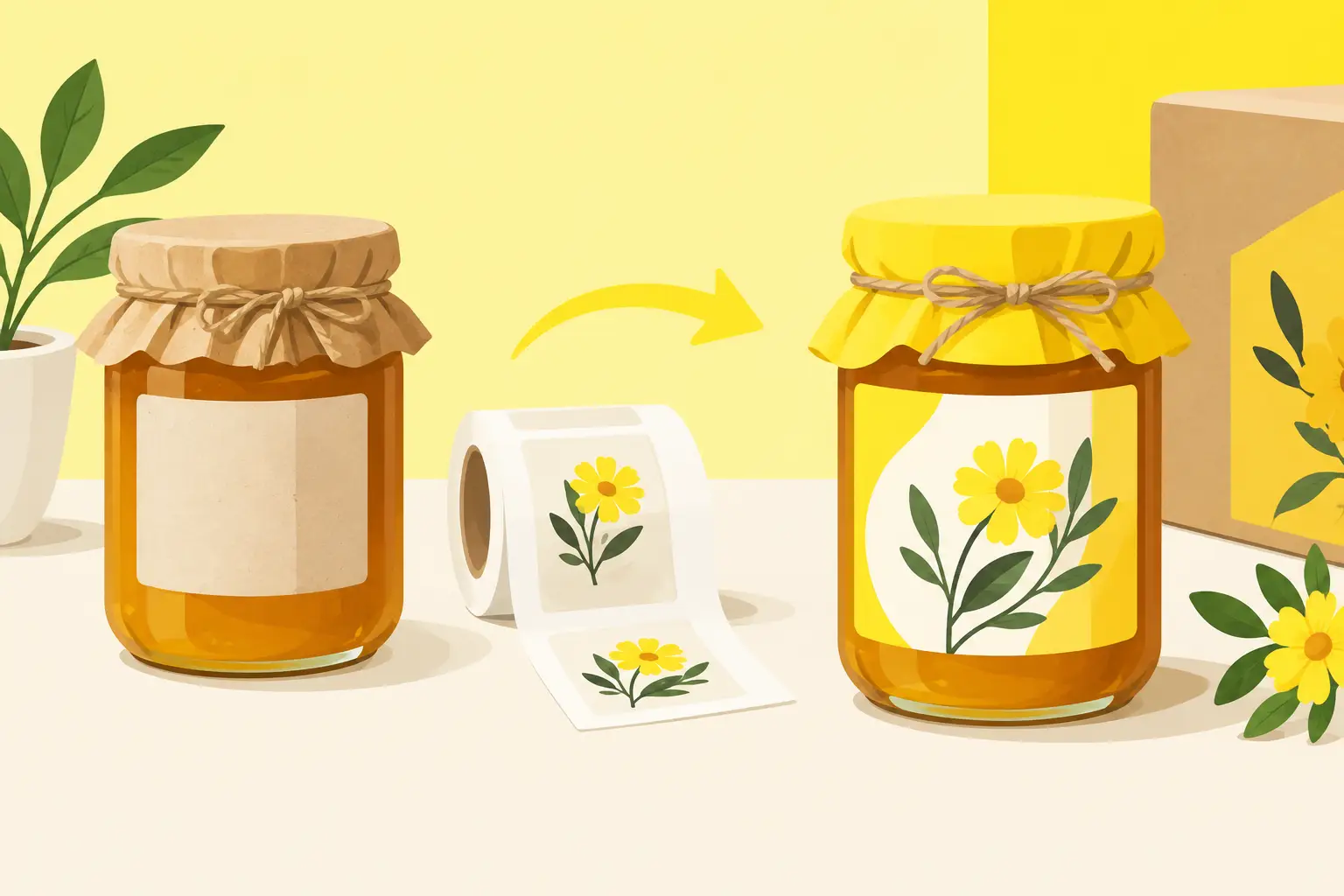
Let's take a small beekeeping operation that sells acacia honey in 250-gram and 500-gram glass jars through farmers markets, gift packages, and its own online shop. The previous paper label worked well for indoor sales, but problems arose at markets and during shipping: the label edges curled up, the moist glass became spotty, and the product information was too small to read easily.
Meanwhile, the producer wanted to introduce new visual identity elements. The family, handmade character remained, but they wanted a cleaner typeface, stronger color codes, and a more unified jar appearance. They didn't need ten thousand labels, just 200 initially to test the new solution in two sizes. This is a typical relabeling situation: the product is known, the recipe unchanged, but the packaging must do more. It needs to make the brand visible, withstand handling, and communicate the most important information in an instant.
Start by Clarifying the Label's Purpose
Designing a new label doesn't begin with color choice. The most important question is where, how long, and under what conditions the customer encounters it. A refrigerated sauce, a cosmetic used in the bathroom, shipped jam, and tea going into a gift box may require different materials and execution. For the beekeeper, the primary requirement was moisture resistance. The glass surface can collect condensation during shipping and storage, and customers often handle the jar by hand. In such cases, a premium self-adhesive vinyl label might be a safer choice than basic paper.
Vinyl is waterproof, more resistant to wear, and lamination can provide additional surface protection. The surface finish is more brand and product-dependent. Glossy vinyl delivers stronger colors and brighter appearance, which suits fruit syrups or playful cosmetic brands well. A matte finish feels more restrained and natural, making it a frequent choice for premium jams, candles, and artisanal foods. Neither is universally better—the packaging material, lighting conditions, and brand style decide.
Retaining Existing Packaging Reduces Costs
When relabeling, many businesses make the mistake of immediately ordering new jars, new boxes, and a new label system. This may be justified in full product development, but it's not always necessary. If the packaging size, closure, and quality are appropriate, updating just the label can create a dramatic change.
In this example, the beekeeping operation kept the jar but replaced the front label with a larger one with rounded corners. This made room for the brand name, honey type, net weight, and a brief origin message. A separate smaller label went on the back with ingredients, storage recommendations, best-before date, and mandatory business information. This two-label solution is tidier than cramming all data onto an overcrowded front label. The customer quickly recognizes what they're taking off the shelf, while detailed information remains easy to read.
For food, cosmetics, and other regulated products, required data content must always be checked according to the specific product category regulations. Printing doesn't replace legal or food safety compliance checks.
How to Build the New Label Design
A good label doesn't try to say everything at once. First, determine what the customer must notice in three seconds. On a honey jar, that's the brand name, product name, and possibly the honey type. Secondary roles go to origin, package size, or a brief quality claim.
Before creating the label design, measure the surface precisely. Consider not just the full width of the jar, but the flat area where the label lies without wrinkling. With conical jars, test adhesion is particularly important, as an oversized rectangular label may peel off or wrinkle. Leave appropriate bleed in the print file, and don't place important text, logos right next to the cutting line. For custom-shaped labels, the contour should follow the graphic's form, but overly thin protruding elements are best avoided. These are less practical to apply and more fragile.
Before finalizing, check these five points:
- The label size fits the actual packaging
- All required product information is clearly readable
- The graphic resolution is suitable for printing
- The chosen material handles moisture, sunlight, and use
- The order quantity includes some spare labels
Validate the New Appearance with Small Runs
The initial 200-piece production wasn't just careful cost management. It gave the producer a genuine test. It turned out that matte vinyl looked good on the amber-colored glass, and the white background remained readable in variable market lighting. Customers more easily distinguished acacia, linden, and wildflower honey because each variety got its own color coding. Testing also reveals when something doesn't work. Perhaps the QR code is too small, the label sits too close to the jar rim, or the chosen yellow shade looks less vibrant on matte finish. With small quantities, these fixes remain manageable. After producing thousands of pieces, changes become far more expensive.
An online configurator speeds up this process: you can select size, shape, material, finish, and quantity while seeing the price immediately. File checking and optional print approval are particularly useful when a company orders the first run of a new label system. Visit getstickerz.eu/#konfigurator to explore your options and see pricing in real time. GetStickerz's low minimum order quantity, available from just 10 pieces, fits samples, limited editions, and gradual brand refreshes perfectly.
When Is Just a New Label Not Enough?
Relabeling is an effective tool, but some situations require more. If the jar shape isn't practical, the closure is inadequate, packaging is fragile, or there's no usable flat surface for a label, consider redesigning the entire packaging. The same applies if product positioning changes radically—for example, a basic market product becoming a premium gift item. However, if the product is good, packaging works, and the goal is fresher, more durable, better-selling appearance, a new label can deliver tangible results with proportionally low investment.
Visit getstickerz.eu/#termekek to browse the available label materials and sizes that suit your needs. Check out getstickerz.eu/rolunk to learn more about our approach to small-batch production, or contact us at getstickerz.eu/kapcsolat with your specific requirements.
Start with precise measurement, a thoughtful plan, and a smaller test order—so your next jar will not only be recognizable but confidently sellable.