10/11/2026
Overview of Sticker Lamination Types for Businesses
A label looks professional on the shelf when its colors remain sharp, its surface doesn't scratch easily, and it doesn't lose quality when exposed to moisture. This overview of sticker lamination types is therefore not merely an aesthetic question: the right protective layer directly affects how long a sticker can be used, what impression it makes, and in what environment it performs reliably.
What Does Sticker Lamination Mean?
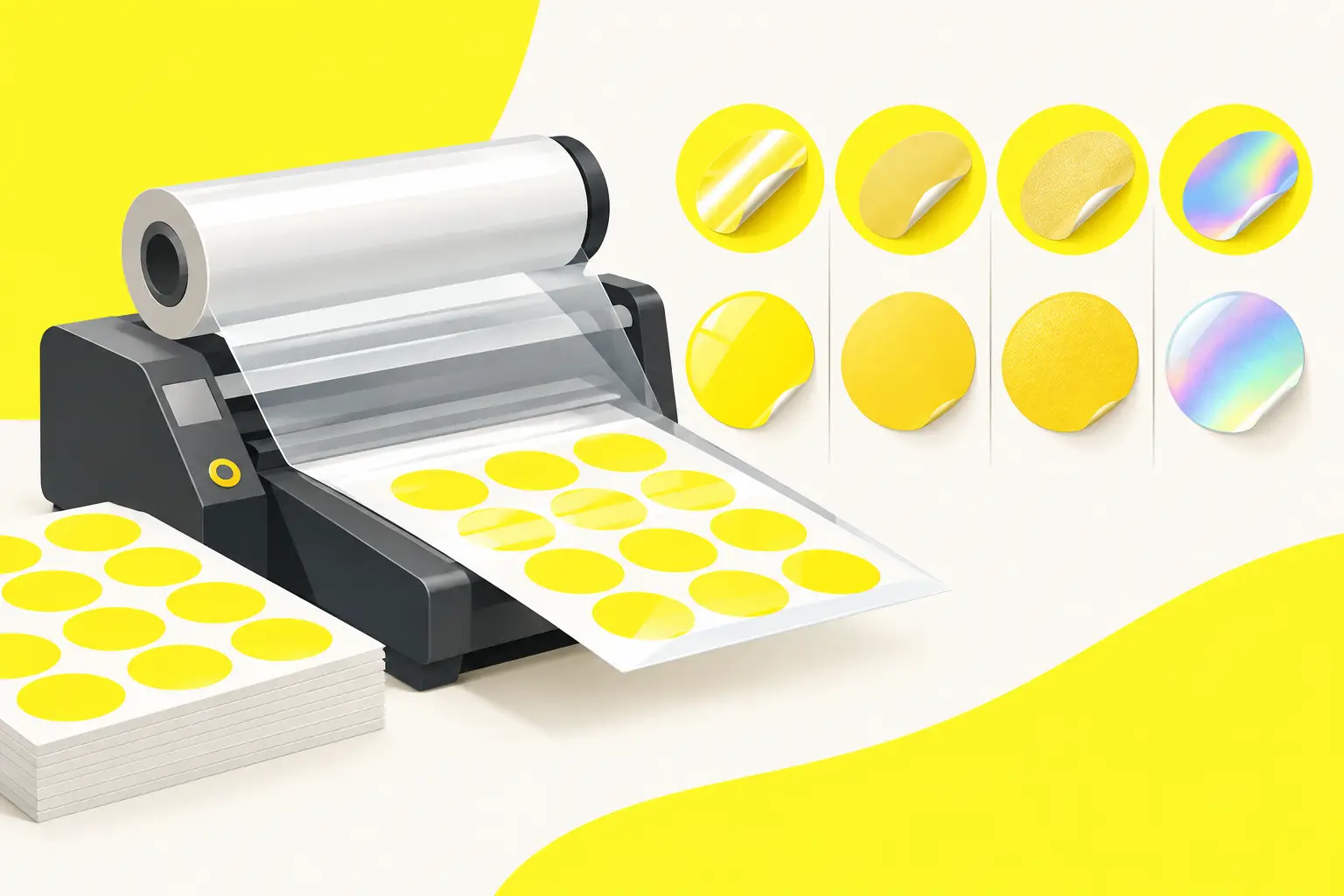
Lamination is a transparent protective layer applied to the surface of a printed sticker. This layer protects the ink from moisture, UV light, abrasion, and minor damage from everyday use. A laminated sticker has a more stable surface, is easier to clean, and maintains print quality better even with intensive use.
There is an important difference between the base material and the lamination. A vinyl sticker can be naturally more water-resistant and durable than a paper-based label, but a laminated surface provides additional protection to the print. If, for example, a bottle label goes into the refrigerator, a cosmetic jar is frequently handled, or an outdoor sticker is exposed to sunlight, lamination is usually a justified choice.
The final result is not determined by the film type alone. The base material, adhesive, surface cleanliness, sticker shape, and how much wear the product receives all matter. A sticker for indoor promotion and a logo applied to a frequently used water bottle require entirely different protection levels.
Sticker Lamination Types: Glossy and Matte Finish
For most brands, choosing between glossy and matte lamination is the most important decision. Both provide protection, but they create completely different visual effects and usage benefits.
Glossy Lamination
Glossy lamination creates a smooth, shiny surface that emphasizes saturated colors and creates stronger contrast in graphics. It works especially well with vibrant illustrations, photo patterns, playful brand identities, and products where quick visual attention is the goal. Beer cans, soft drinks, children's products, promotional stickers, or colorful logos often make this a practical choice.
The glossy surface wipes off more easily, so it's also advantageous when the sticker frequently contacts water or dirt. The compromise is the reflection. During strong store lighting, sunlight, or photography, the surface may shimmer, making certain details less visible. If your design contains lots of small text or the product is frequently photographed, it's worth considering this during the design phase.
Matte Lamination
Matte lamination provides a more restrained, premium feel. It doesn't reflect light strongly, so text is easier to read, and a darker color palette looks particularly elegant. It's a frequent choice for cosmetics, artisanal products, specialty coffees, candles, natural brands, and minimalist packaging. The matte surface feels smoother to the touch, less plastic-like, and suits sophisticated branding well.
A black, deep green, or pastel-colored label in matte finish often conveys a more expensive product feel, even if the label is small. In exchange, on matte film, oily fingerprints or marks from stronger rubbing can be more visible under certain circumstances. This is primarily relevant for dark, large uniform color areas. If the product is frequently handled, it's worth checking the chosen graphic and surface on a sample piece.
Cold and Hot Lamination in Production
Lamination technology can also vary. In sticker production, cold lamination is often used, where the protective film is applied to the printed surface with a pressure-sensitive adhesive layer. This is a gentle process, works well on self-adhesive vinyl materials, and provides reliable protection even for small to medium print runs.
Hot lamination uses heat to seal the film. This can be advantageous for certain printing products, but not all self-adhesive materials and adhesive layers tolerate heat equally. When ordering stickers, the customer's decisive factor is usually not the technology name, but rather whether the finished sticker can handle the intended use. There is also liquid lamination, which is mainly used for larger industrial or specialized applications. It can provide special surface protection, but doesn't necessarily mean a better choice for a smaller product label or promotional vinyl sticker. The right solution always depends on the application and desired appearance.
When Should You Choose Laminated Stickers?
Quality stickers can be made without lamination, especially for short-term indoor campaigns, single-use packaging, or surfaces that don't receive much physical stress. However, if the sticker is a permanent part of a product's identity, a protective layer is usually a worthwhile investment.
Lamination is especially recommended if the sticker will be exposed to water, moisture, or cooling, if it's used outdoors, if it's frequently handled, or if it needs to maintain its colors long-term. On honey jars, sauce bottles, cosmetic containers, sports water bottles, laptops, vehicles, and outdoor information surfaces, extra protection can make a visible difference.
The product's sales environment also matters. For a premium gift box or a cosmetic product frequently photographed on a web shop, surface choice is part of the brand feel. For a jam label destined for farmers' markets, water resistance and easy cleaning might be more important than a restrained appearance.
How to Choose Based on Usage
To make a confident decision, it's worth starting from the actual use of the finished sticker, not just the visual design. Before placing your order, answer these four questions:
Will the sticker be exposed to water, moisture, cooling, or direct sunlight?
How often will the surface be handled, wiped, or rubbed?
Do you expect bright, attention-grabbing, or rather premium, understated appearance?
Does the graphic include small text, QR codes, or dark color fields?
For vibrant graphics and frequent cleaning, glossy lamination is often sensible. For elegant product packaging, fine details, and strong lighting conditions, a matte surface might be better. For QR codes and small font sizes, always check that contrast remains adequate, as good readability is more important than any surface effect. When you visit getstickerz.eu/#konfigurator, you can test different options before finalizing your order.
Common Mistakes When Ordering Laminated Stickers
One of the most common mistakes is automatically choosing lamination the same way for every situation. Glossy finish isn't always too flashy, and matte isn't always more premium. For a colorful, youthful brand, glossy finish might be the conscious and consistent choice, while a heavily used black sticker on matte finish may require more care.
Overly thin fonts, low-resolution graphics, or files without bleed can also cause problems. Lamination doesn't improve low-quality base graphics, it only protects what's already being printed. It's worth uploading a properly high-resolution file and checking the details of cut contours and safety margins.
Visit getstickerz.eu/#termekek to explore available materials and their properties. In the GetStickerz configurator, besides selecting size, shape, material, and finish, instant pricing helps you plan your order quantity. File checking and the available print preview reduce the risk that an important label will look different after production than on screen.
If you're uncertain between two finishes, don't just look at which looks better in a digital mockup. Think about where the product will be stored, who will use it, and what condition it needs to reach the customer in. These few practical considerations usually lead more quickly to the right lamination than a purely aesthetic decision.
For specific questions about your sticker project or to discuss your needs in detail, visit getstickerz.eu/kapcsolat to get in touch with our team. You can also learn more about our company and processes at getstickerz.eu/rolunk.