14/08/2026
Rectangle Label Printing for Product Packaging
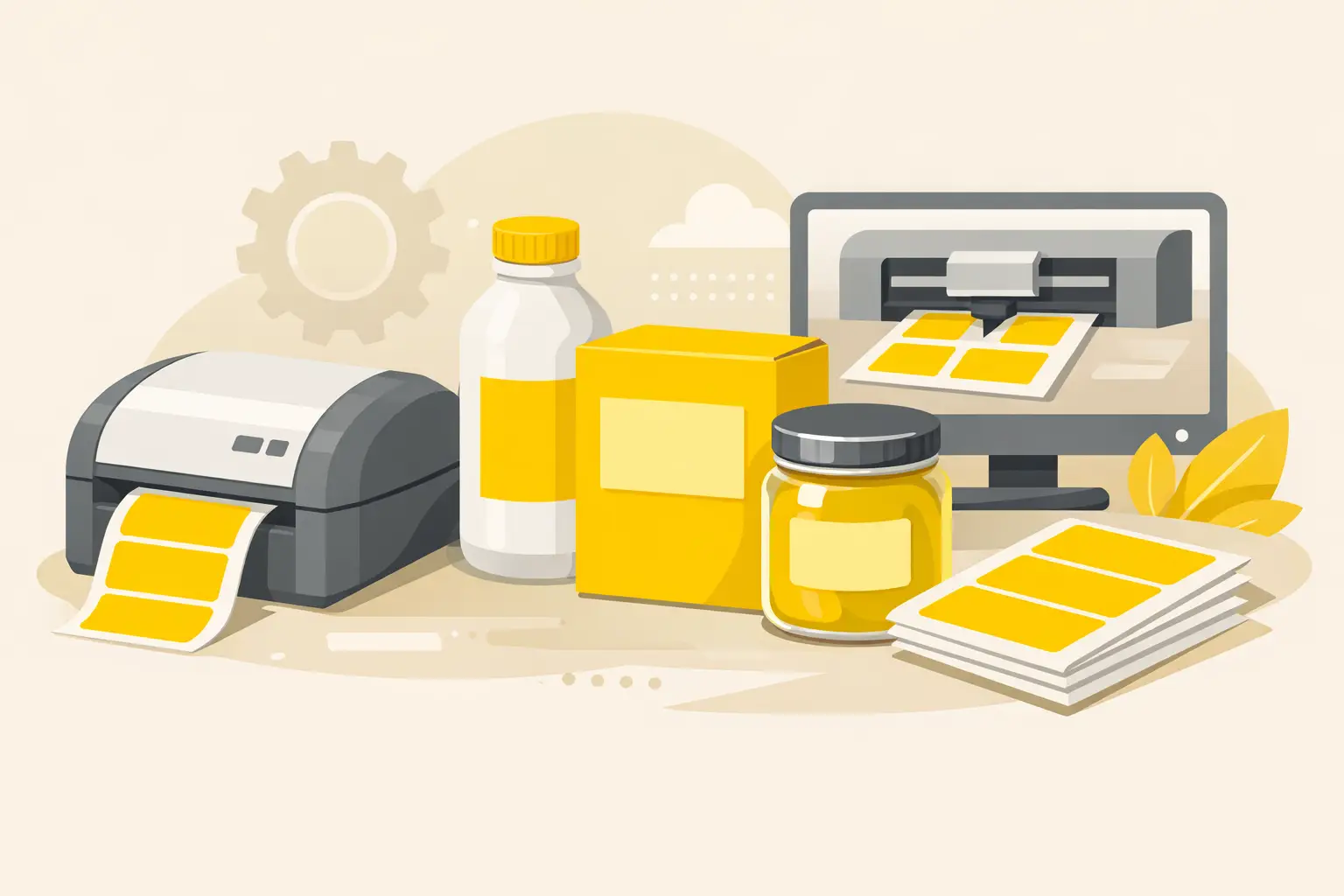
A jar of honey, a cosmetic container or a craft beverage bottle often comes down to one crucial point on the shelf: how clean, precise and readable its label is. Rectangle label printing is therefore not simply a graphic design task. The right size, material and finish directly influence whether the product makes a premium impression, remains easy to handle, and whether the label can withstand everyday use. The rectangle shape is a practical choice because it makes good use of the available printing surface. It can be easily placed on glass, boxes, pouches, bottles or mailing packages, and provides enough space for the brand name, ingredients, barcode, and mandatory product information. Even in small batches it provides a professional appearance, making it a working solution for both startups and companies regularly introducing new products.
When is rectangle label printing ideal?
Rectangle labels are most effective when the packaging offers a straight or slightly curved surface. They are a classic choice for jams, honeys, sauces, candles, cosmetics, teas, coffee packaging and gift boxes. For e-commerce brands, they can also serve as box closure labels, branded packaging stickers, or promotional labels included with orders. The advantage of the shape is that graphic design is predictable. Text can be arranged in straight lines, the logo can be positioned stably, and there is also easy to leave adequate space for barcodes or QR codes. When you need to include a lot of information, a horizontal rectangle is often a better choice than a smaller circular sticker. However, if the bottle is narrow and tall, a vertical layout might be more proportionate.
Not every packaging requires the same size. On a strongly tapered or very narrow bottle, an overly wide label can peel off or wrinkle. In such cases, it's worth choosing a shorter, narrower label and prioritizing the most important information.
Choosing the right size based on packaging
The label size is not determined solely by the graphic design. First, the attachment surface must be measured precisely: its width, height, and in the case of cylindrical products, the usable circumference. The label should not touch edges, ridges, seams or the curved part of the bottle. Good practice is for the label to remain a few millimeters inside the edge of the flat surface on all sides. This helps with precise placement and reduces the likelihood of the sticker curling during use. With glass, jars and plastic bottles, test application is particularly important if you are introducing a new packaging format.
The content also matters when it comes to size. A simple logo label can be compact, but a food or cosmetic product typically requires more text. A crowded label is harder to read and looks less trustworthy. If mandatory information doesn't fit comfortably on the front, consider using a separate back label or a two-sided packaging system.
Bleed, safety zone and cutting
When preparing a print file, the background color and images should be designed with bleed. This area extending beyond the cut line prevents a narrow white strip from remaining at the label edge due to precise cutting. Logos, small text and important graphic elements should remain within the safety zone. A very thin frame might look visually appealing on screen, but due to cutting tolerances it can appear uneven in print. If you use a frame, make it sufficiently thick, or incorporate it into the design so that small deviations are not noticeable.
Material choice: glossy or matte vinyl?
Premium vinyl label is a good choice if the label needs to withstand shipping, handling, moisture or frequent use. Because of its water-resistant and UV-resistant properties, it works well on products that go into refrigerators, are in humid environments, or are occasionally used outdoors. The glossy finish provides stronger colors and more striking contrast. It works well with vibrant graphics, beverages, promotional stickers and packaging where the goal is to grab attention quickly. However, it can appear shiny in bright light, and fingerprints are also more visible on it.
Matte vinyl provides a more understated, modern appearance. It is particularly well suited for natural cosmetics, premium foods, craft products and minimalist brand identities. On a matte surface, fine typography and a restrained color palette also look more elegant. The choice is therefore not a quality issue - it rather depends on what feeling the packaging needs to convey.
When is it worth requesting lamination?
Lamination provides additional protection to the print, especially for products that are frequently handled, subjected to friction or used in wet environments. It can be useful, for example, on water bottles, cosmetic bottles, chilled drinks or regularly shipped boxes. If the label only appears on dry, protected shelves and the budget is tight, lamination is not always necessary. However, if the label remains the brand's visible surface throughout the entire product lifecycle, this small additional investment is often worthwhile.
Graphics that work well in print
The first rule of good label design is readability. The brand name and product name should be quickly recognizable, even if the customer makes a decision in a few seconds. Smaller printed information - ingredients, instructions for use, net quantity - should be separated with appropriate line spacing. The combination of a dark background and very fine, light text is elegant, but can be risky at small sizes. The same goes for overly thin lines and detailed, intricate illustrations. What you see clearly in an enlarged screen view can easily get lost on a 50 mm wide label.
The safest print file is usually a high-resolution PDF with appropriate bleed and embedded fonts. With raster graphics, proper resolution is essential, otherwise photos and fine details can appear lifeless. Colors may appear differently on material and screen, so for brand-identical shades, it's worth requesting a print sample or preview approval. Visit getstickerz.eu/#konfigurator to configure your labels with all these specifications.
From small quantities to regular reordering
The advantage of small-batch production is that you don't need to keep thousands of pieces in stock just because traditional printing would require it. You can order from ten pieces on up, so a new flavor, seasonal packaging, limited edition or newly launched product label can be tested cost-effectively. With larger quantities, the unit cost is typically more favorable, but excessive inventory also has a price. If ingredients, regulatory data, prices or design elements change frequently, more flexible, phased reordering can reduce the risk of waste.
In the online configurator, you can specify size, quantity, material and finish, and the price is immediately visible. In the GetStickerz ordering process, file checking within 24 hours helps eliminate errors that could jeopardize production, and print preview approval can also be requested if needed. This is particularly useful if you are creating a new size or label for new packaging for the first time. Check out getstickerz.eu/#termekek to see all available options.
Before application: three small details that make a big difference
Label durability depends not only on the material. The attachment surface should be clean, free of dust, grease and moisture. Let glass and bottles warm to room temperature before labeling, as a cold or damp surface can compromise adhesion. It's best to apply the label gradually from one side while smoothing it onto the surface. With larger rectangle labels, this reduces the likelihood of air bubbles. On cylindrical packaging, a simple positioning mark or template can save a lot of time when labeling hundreds of products uniformly.
A well-designed rectangle label is not just information. It brings order to the packaging, supports sales, and consistently represents the brand on every single product. Start with precise measurement, choose material appropriate for the use, and give yourself the opportunity for approval before the full series goes into production. For more information or to get started, visit getstickerz.eu/kapcsolat to contact our team or explore more on getstickerz.eu/rolunk.