01/10/2026
UV-Resistant Sticker Durability Testing in Practice
When Does an Outdoor Sticker Really Prove Itself?
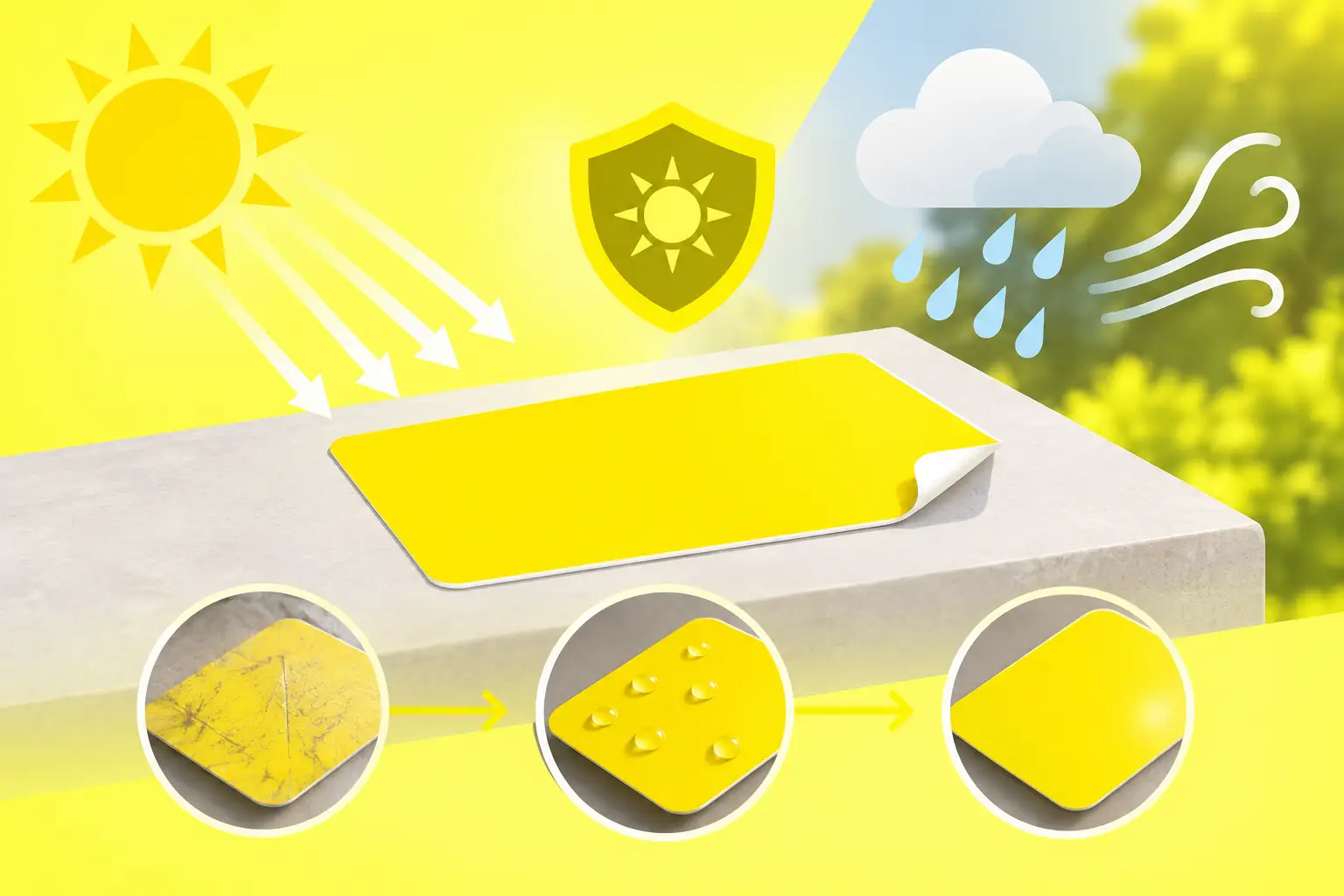
A sticker designed for outdoor use doesn't prove its worth when it's freshly applied to a product, storefront, or vehicle. The real test comes months later. UV-resistant sticker durability testing therefore isn't just about fading colors. It examines how the graphic, carrier material, adhesive, and lamination (if needed) work together to withstand sunlight, moisture, and daily use. A beekeeper's glass label, a cosmetic jar sticker, and an outdoor promotional sticker face different stresses. Good material selection isn't about the longest specification sheet, but about making a decision tailored to real-world conditions.
What Does a UV-Resistant Sticker Durability Test Measure?
Ultraviolet radiation from sunlight gradually breaks down or changes certain components of the printed surface. The most visible sign is color fading: deep black can become grayish, vibrant red can dull, and blue and purple shades may be particularly sensitive. However, color retention is just one measurement criteria.
In durability testing, it's also worth checking whether the sticker edges peel away, the film shrinks, the print cracks, or the adhesive's grip changes. On packaging labels, chemical exposure—such as oil, alcohol, hand cream, or cleaning products—can be as much of a risk as UV light itself. On vehicles or outdoor signs, temperature fluctuations, rain, dust, and mechanical friction add to the stress.
Tests can occur under accelerated laboratory conditions with UV light sources, heat, and humidity, or under real outdoor exposure. Lab results provide good comparable grounds between materials, but they don't perfectly replicate every location's weather. A south-facing storefront window in constant sunlight and a covered terrace sticker will have different expected lifespans even if made from the same roll.
What Determines Outdoor Lifespan?
Durability can't be described solely by saying a sticker is "UV-resistant." This is a useful property, but the entire system matters. Premium vinyl carrier material can be a more flexible and durable choice than paper-based labels, especially on surfaces exposed to water, moisture, or outdoor temperature changes. Printing technology and ink quality also affect color retention.
Not all colors behave the same under prolonged sunlight exposure. If your brand's key color is vibrant orange, a neon shade, or a delicate pastel, it's worth mentioning before production and selecting appropriate materials for the intended use. The surface is also a decisive factor. On smooth, clean, dry, and degreased base surfaces, adhesive performs much more reliably. Porous cardboard, rough walls, low surface-energy plastics, or curved bottles present greater challenges. In these cases, you need to check not just UV resistance, but whether the label can lie flat properly.
The Role of Lamination
Lamination adds an extra protective layer to the print. It helps reduce scratching, wear from moisture and frequent touch, while keeping the printed graphic less directly exposed to environmental stresses. For outdoor use, regularly cleaned products, water bottles, helmets, or vehicle stickers, this is often a justified choice. However, not every task requires it.
If the sticker is for a short campaign, will be in a covered location, or is for single-use promotional packaging, the extra cost of lamination may not pay off. The goal is to choose as much protection as the actual use truly demands.
Glossy or Matte Surface?
Glossy vinyl delivers stronger color impact and more striking appearance, making it popular for promotional stickers and colorful graphics. A matte surface feels more restrained and premium, and reflects less under strong lighting. From a UV durability perspective, neither surface alone replaces appropriate base material or protection, but both strongly influence user experience.
How to Interpret Durability Claims?
When you see "suitable for outdoor use," always ask yourself: where exactly and for how long will the sticker go? A storefront window sticker replaced after one season means different requirements than long-term branding on a delivery truck. Expected durability can be modified by geographic location, direction (south or north-facing), altitude, cleaning frequency, and mechanical stress.
For the best decision, provide a detailed brief before ordering. Describe whether the sticker will be indoors or outdoors, whether it gets direct sunlight, what surface it goes on, whether it contacts water or chemicals, and how long it needs to perform flawlessly. This speeds up material recommendations and reduces the chance that an otherwise good-quality sticker gets assigned to the wrong task.
Practical Checks Before Ordering
The digital mockup shows how the graphic looks. From a durability perspective, however, production preparation is equally important. Check that your file has adequate resolution, the cutting line is clear, and important text isn't too close to the cut edge. Very thin details and fine lines are more vulnerable during outdoor use, especially with frequent rubbing.
A smaller initial order or sample piece can be particularly helpful for new packaging, a new bottle type, or an unusual surface. A brief real-world use test can tell you more about adhesion than any general description. This isn't uncertainty about printing quality, but conscious risk management: your product, surface, and storage environment are unique.
In the GetStickerz ordering process, the online configurator at getstickerz.eu/#konfigurator lets you immediately select size, shape, quantity, and material, while file checking helps filter out errors correctable before production. For high-visibility brand materials, print preview approval provides extra security before the full quantity goes into production.
Which Application Requires Which Solution?
For food or beverages stored in a refrigerator, vapor, condensation, and frequent handling are the main concerns. Here, waterproof vinyl and reliable adhesion usually matter more than years of UV resistance. For outdoor glass surfaces, mailboxes, or bicycle equipment, direct sunlight and weather are primary considerations.
For cosmetics and craft products, it's common for the sticker to encounter different lighting in stores, markets, and home use. The label becomes part of the brand: if it curls or wears away, that affects perceived product quality. Choosing the right carrier, adhesive, and finish is therefore just as much a manufacturing decision as precise color profile or readable label text.
A durable sticker doesn't necessarily mean the most expensive configuration. The right choice is one that maintains its color, adhesion, and neat appearance throughout the intended use period. If you're uncertain about the surface or extent of outdoor exposure, it's worth specifying the exact application before ordering—visit getstickerz.eu/#termekek to explore options or getstickerz.eu/kapcsolat to discuss your needs. That way, your sticker performs well not just on the day of receipt, but throughout its actual use.