01/07/2026
Waterproof Labels for Small Businesses: What to Pay Attention To
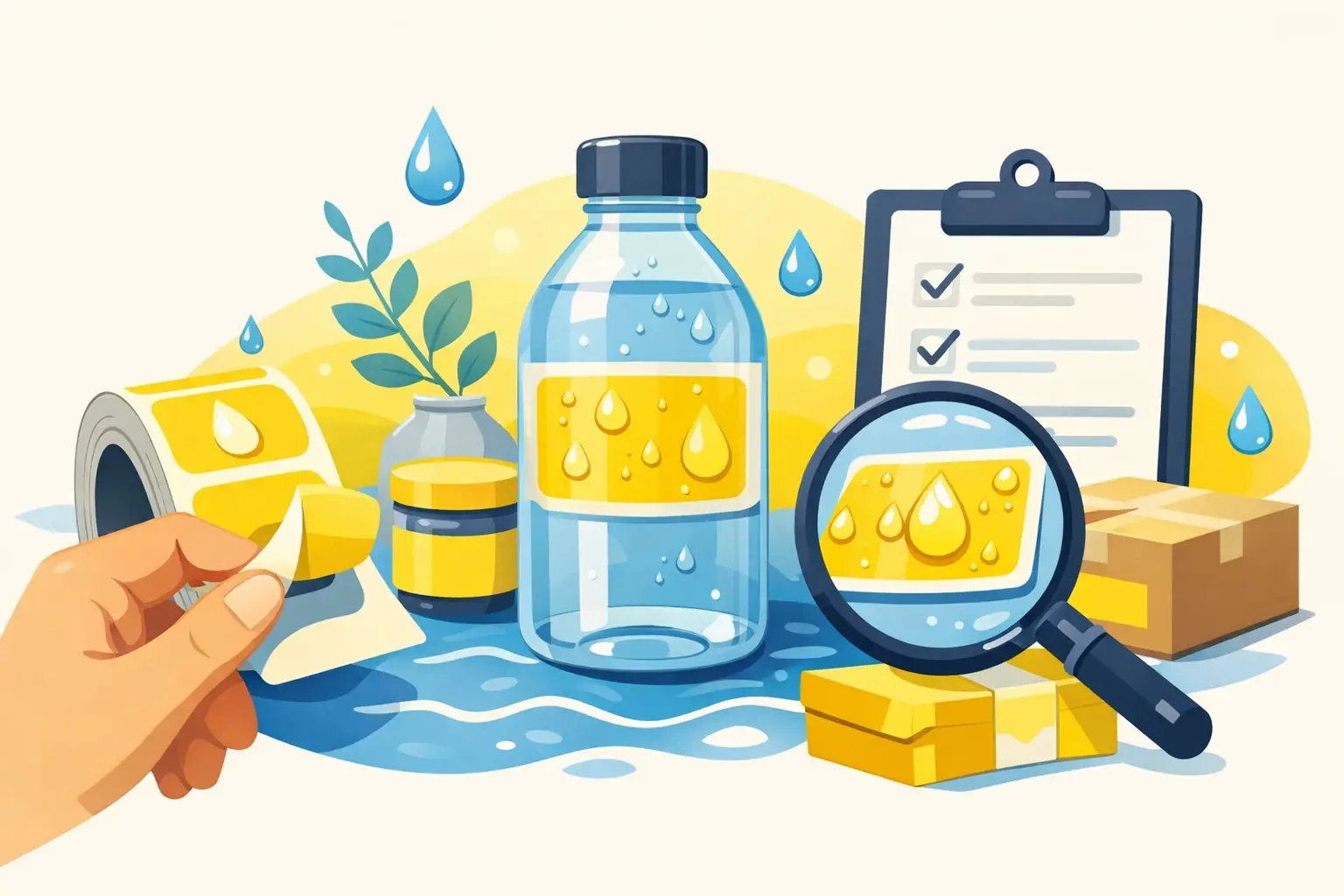
If your product goes into a refrigerator, sits on a humid shelf, or is frequently handled, waterproof labels for small businesses aren't an extra comfort option but a fundamental packaging decision. A soaked, curled, or smudged label isn't just an aesthetic problem. It's also a trust issue, especially when you're building a brand in small batches and every single sale counts. Most small businesses don't order too many labels; they simply choose the wrong type too early. Instead of a paper-based solution, in many cases it's worth considering an material from the start that remains stable alongside moisture, splashing, refrigeration, or outdoor use. This is particularly true for artisanal foods, cosmetics, beverages, candles, cleaning products, and any product where the packaging regularly encounters water or moisture.
When Do Small Businesses Really Need Waterproof Labels?
Not every product requires the same level of resistance. A label on a dry, indoor shelf-stored box experiences different stress than a honey jar label, a chilled soft drink, or a cosmetic product in a bathroom. The right decision here isn't to choose the strongest possible material for everything, but to match the specification to actual use.
Waterproof labels are typically necessary if the product requires refrigerated storage, if condensation appears on the surface, if wet hands regularly touch it, or if the packaging is exposed to changing temperatures during transportation. A small-scale brewery, a beekeeping operation, or a natural cosmetics brand typically faces these situations. The same applies to online shops fulfilling orders, where packaging needs not only to look good but also remain flawless upon arrival.
However, waterproofing isn't a single property. The base material, printing technology, surface treatment, and adhesive all matter. If any of these are weak, the entire label's performance can suffer.
The Material Makes the Difference
Small businesses often start by thinking about design, yet durability is primarily determined by the material. For waterproof labels, vinyl or other plastic-based film materials are the safer choice because they don't absorb moisture like paper, don't wave up the way paper does, and better withstand mechanical stress.
The choice between glossy and matte finish here depends more on usage and branding considerations. Glossy surfaces can offer more vibrant colors and stronger shelf impact on many products. Matte feels more understated and premium, and fingerprints show less. Neither is inherently better. It depends on what you're selling, what your packaging looks like, and in what environment the customer encounters it.
Lamination as a separate layer of protection can be useful, especially if the label faces not just moisture but also rubbing, scratching, or more intensive use. With cosmetics, beverage bottles, or outdoor use, this often pays off. However, if the label goes on short-lived promotional packaging, it may not be strictly necessary.
It's Not Enough to Be Waterproof—It Also Has to Stick Well
Many complaints occur not because the print deteriorates but because the label edge lifts. This is typically an adhesion or application problem. A smooth glass surface is different from a slightly textured plastic tub, a coated section of a cardboard box, or a chilled bottle. The adhesive's performance greatly depends on the surface the label is applied to and the temperature at which it's applied.
If you're applying to a cold bottle or working with dusty, greasy packaging, even a high-quality label won't perform as it should. In such cases, the problem often isn't in manufacturing but in application conditions.
In small batch production, it's particularly important that not just the first ten pieces look good but the fiftieth or hundredth also maintains the same standard. This is why it matters that the label is precisely cut, arrives in easy-to-handle format, and fits your own packaging workflow.
Which Businesses Benefit Most from Waterproof Labels?
Waterproof finishes deliver the most value where products directly encounter moisture or changing environments. Honey producers benefit because glass frequently gets steamy and labels experience stress when handled. Breweries and beverage brands benefit because refrigeration and condensation quickly reveal weak material defects. With cosmetic brands, bathroom use, humid air, and oilier product residues test the label.
The situation is slightly different for online shops. The packaging won't necessarily get wet, but due to shipping, storage, and handling, durable material is still advantageous. If your product ships in small boxes, pouches, or bottles, label quality directly influences the first impression. For startups and new brands, this solution is also practical because you can achieve professional impact even with low order volumes. You don't need to commit to large inventory quantities just to get good material quality.
This is especially useful if you're still testing the market, running multiple flavor variations or package sizes, and don't want to take on excessive printing risk with each decision.
How to Choose Labels If You Don't Want to Reprint
The best starting point is always to think through the label's actual life cycle. Where is the product stored, what does it contact, how long does it remain in use, and what surface does it apply to. From this, it quickly becomes clear whether a simpler solution is sufficient or if waterproof, UV-resistant, or laminated options are already justified.
Then comes shape and size. Beautiful graphics can become problematic if they get too close to the cut edge, if they're hard to read at small sizes, or if the label's proportions don't match the packaging. A common mistake with small businesses is trying to force the same design onto multiple types of packaging. This is convenient in the short term but often produces weaker results.
Print quality control and preview approval here isn't an administrative loop but error prevention. If the file isn't properly prepared, the best material won't produce professional results. A reliable ordering process therefore offers not just price calculation but pre-production control. This is especially important if you haven't ordered custom labels before or if you're launching a new product line.
Why Does Small Order Volume Matter?
Many small businesses don't need thousands of labels at once. In fact, this is often a disadvantage. If you sell seasonal products, frequently update design, or work with multiple SKUs, excessive inventory is just dead money. Small batch ordering is therefore not a compromise but an operational advantage. Lower minimums let you test faster, calculate more precisely, and keep your stockroom from filling with obsolete packaging material.
This is particularly valuable for startups, artisanal manufacturers, and online shops where product offerings are still evolving. And if volume grows later, the same specification can be easily scaled up. An online ordering system where pricing is immediately visible, format is configurable, and file checking happens quickly significantly reduces procurement time. In practice, this is not only more convenient but also provides better business decision support. This is why the GetStickerz model works well even for small and medium-volume label orders.
How Much Durability Do You Really Need?
There's no single right answer. If your product sells out in a few weeks, priorities differ from when it sits on shelves for months or regularly moves outdoors. Waterproof labels are sufficient in many situations, but if UV exposure, intensive rubbing, or strong chemical effects are present, it's worth considering a higher protection level.
There's always a balance between cost and performance. It doesn't make sense to over-engineer a label, but it's not worth cutting corners either. A cheaper but failing solution ultimately costs more through reprinting, waste, poor appearance, and damaged customer trust.
If you want to be sure, don't just ask whether the label is waterproof. Ask how it will perform on your product, on your surface, in your logistics environment. This is the perspective that delivers fewer errors, better appearance, and more predictable packaging quality in the long term.
A good label isn't necessarily noticed. It simply does its job whether the product is cold, wet, in transit, or already in the customer's hand. As a small business, that's exactly what you need: a solution that doesn't demand special attention because it's fundamentally reliable.
You can configure and order your custom labels at getstickerz.eu/#konfigurator, explore our product options at getstickerz.eu/#termekek, learn more about our approach at getstickerz.eu/rolunk, or reach out to us directly at getstickerz.eu/kapcsolat.