29/10/2026
When Is Digital Offset Printing Worth It?
When Digital Offset Printing Makes Sense
A first order for a new product label rarely starts with thousands of units. Most small businesses first test their packaging, introduce seasonal flavors, launch new cosmetic product lines, or simply want to refine the graphics. This is where digital offset printing can be a good choice because it delivers professional color quality in small to medium quantities without lengthy preparation processes. Many people use this term as an umbrella concept for high-quality digital printing. In practice, it refers to the technology that offers detail and color perception close to traditional offset while not requiring conventional printing plates. With labels and custom stickers, the name itself isn't decisive—what matters is how the chosen method performs for your quantity, graphics, materials, and usage environment.
What Does Digital Offset Printing Mean in Practice?
Traditional offset printing requires a printing form for every color and longer press setup. This is economical for large quantities because the startup cost is spread across thousands of units. For a few hundred label orders, this preparation can disproportionately increase the unit price and turnaround time.
In digital systems, the approved graphic goes directly into the printing process. There's no plate making, so it's easier to create multiple variations: different flavors, scents, sizes, or campaign versions. A honey producer, for example, can order separate labels for acacia, rapeseed, and mixed flower honey without facing high startup costs for each variation.
The word "offset" in this context primarily signals a quality expectation. Customers expect small text to be legible, fine lines not to break apart, and colors to appear consistently. This is ensured not just by the printing technology but also by appropriate materials, file preparation, and manufacturing quality control.
When Is This the Right Choice for Labels or Stickers?
Digital offset printing is particularly justified when flexibility matters as much as appearance. With small series launches, frequently updated designs, or multiple product variations, it's usually more manageable than traditional offset. You don't need to order a larger inventory just to make the unit price seem better. This also reduces inventory risk.
If ingredient lists change, a new brand identity is created, mandatory labeling is updated, or a webshop adjusts its packaging for new product photos, the old label inventory won't sit on shelves in large quantities. Low minimum order quantities are therefore not just a convenience advantage but a business advantage.
The technology can also be a good choice for premium promotional stickers. For a sticker intended for a laptop, package, or event, color accuracy, contour cutting precision, and surface durability together shape the first impression. A good print alone isn't enough if the sticker curls up after a few uses or loses its appearance from moisture.
Small Quantities, Multiple Designs
If you need ten units each from several different designs, digital manufacturing is typically more reasonable than a single large run. This applies to handmade products, limited editions, gift packages, and market tests. For labels with variable data—such as serial numbers, unique names, or campaign codes—digital workflows offer greater flexibility.
Detail-Rich, Colorful Visuals
For photos, color gradients, multi-color illustrations, and fine typography, it's worth considering a trial approach. Very small negative text, hair-thin lines, or graphics built with color on color can be sensitive to any technology. File checking in these cases isn't a redundant step but rather a way to reduce manufacturing risk.
Technology Doesn't Replace Good Material Selection
A label's job doesn't end at printing. It continues at the point of application, during shipping, in the refrigerator, in the bathroom, or even during outdoor use. For this reason, technology selection should always be considered together with the application environment.
Premium vinyl can be a good foundation for stickers and labels that must withstand water, moisture, or frequent contact. A glossy finish provides a stronger, more vibrant color effect, making it ideal for eye-catching promotional graphics. Matte vinyl creates a more understated, elegant feel and works particularly well with cosmetic, handmade, or minimalist brand packaging. Lamination can offer additional protection against scratches, moisture, and UV exposure. Not every order requires it, but for outdoor use, on bottles, glass containers, or heavily handled products, it may be justified.
If the label will go on an oily, heavily textured, or very cold surface, it's worth clarifying or testing the material and adhesive behavior separately.
How to Prepare Print-Ready Graphics?
Fast manufacturing works well when the submitted file can be produced clearly. Vector PDF is usually a safe foundation because logos, fonts, and contours remain sharp regardless of size. With raster graphics, proper resolution matters: an image downloaded from a website at small size can easily become lifeless when printed. It's advisable to keep important text and logo elements at a safe distance from the cutting line. For custom-shaped, contour-cut stickers, this is especially important because thin lines or letters running too close can be fragile.
Using bleeds helps avoid unwanted white edges if the cut deviates minimally within technological tolerance. There can be differences between RGB colors seen on screen and printed results. This isn't an error but rather the different operation of displays and print color spaces. For brand colors, it's useful to provide reference material, and for significant orders, request a print preview approval. File checking within 24 hours speeds up the process while allowing obvious problems to be filtered out.
Quantity, Price, and Turnaround: How to Plan Realistically
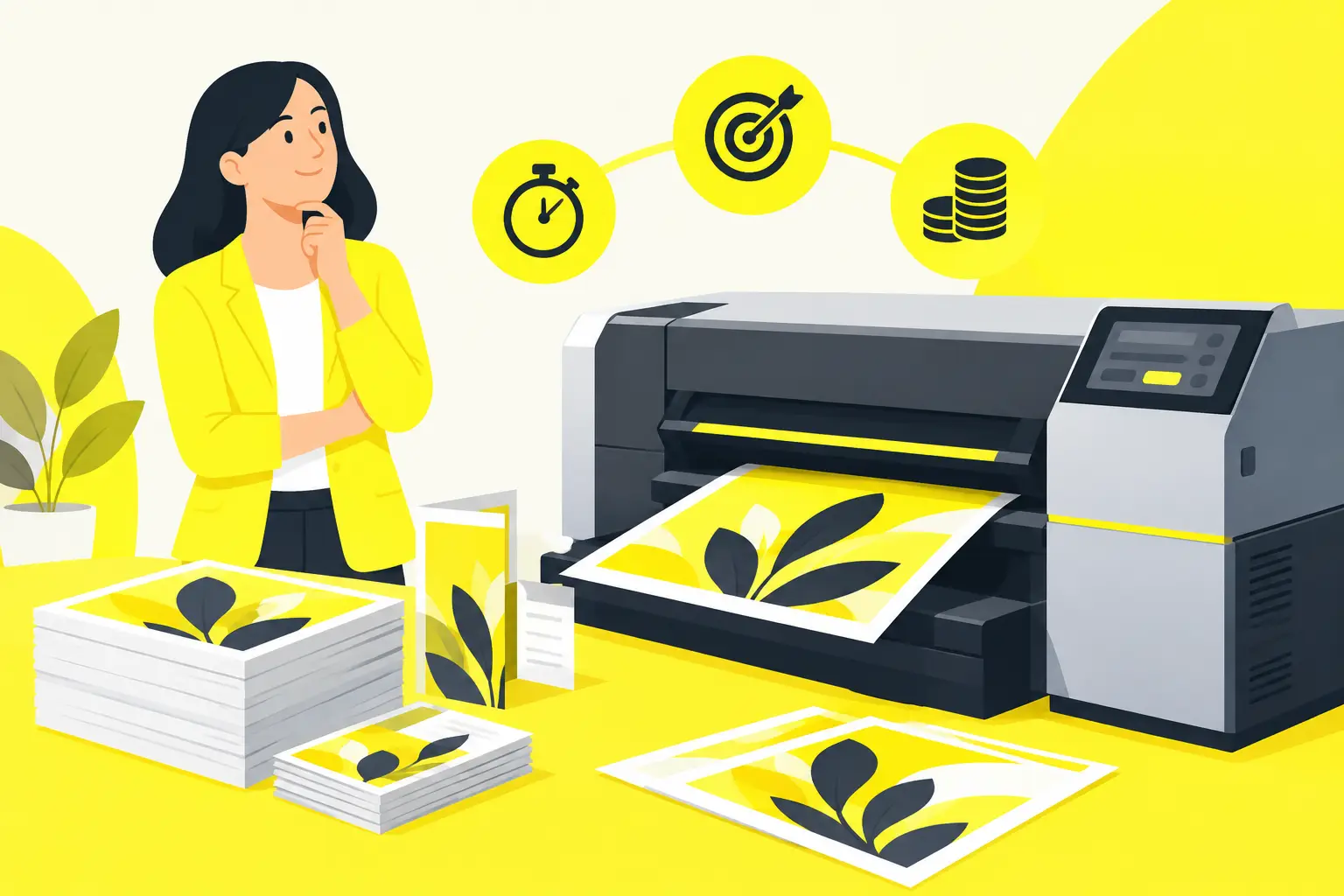
With digital processes, there's no classic plate startup cost, but this doesn't mean the same solution will be most cost-effective for every quantity. For large, constant-graphic volumes, traditional offset may be more economical. If, however, the order consists of multiple variations, is regularly modified, or you don't want to maintain unnecessary inventory, the total cost of digital manufacturing often presents a more favorable picture.
Four pieces of data are needed for price calculation: size, shape, material, and quantity. These are accompanied by finish options—such as individually cut or sheet-format stickers—and lamination if needed. The individually cut version is practical for packaging, gifting, and promotional distribution. Sheet format can provide quick application for product labeling.
Always count the deadline from the final, reviewed file. If you request approval preview, build this time into your campaign or product launch plan. This seemingly short additional step is much cheaper than re-running an entire series due to a typo, incorrect ingredient list, or poorly placed graphic element.
Common Mistakes to Avoid
The most typical problem doesn't occur at the printing machine but before ordering. These include font sizes that are too small, low-resolution logos, backgrounds without bleeds, or overlooking the product's actual surface. A rounded glass bottle, a soft pouch, and rough cardboard all require quite different labels. It's also common to decide based solely on unit price. A cheaper but non-waterproof option can quickly become expensive if the label separates during cooling or outdoor stickers fade from sunlight. It's worth planning for the entire lifespan of use, not just the moment's ordering cost.
Getting Started with Your Order
Visit getstickerz.eu/#konfigurator to instantly design your order based on size, shape, material, and quantity, starting from low minimum quantities of just 10 units. Fast file checking and optional preview approval provide particular assurance when preparing a new product family or first label order. Explore all available options at getstickerz.eu/#termekek, learn more about our process at getstickerz.eu/rolunk, and don't hesitate to contact us at getstickerz.eu/kapcsolat for custom requirements.
The Quality Principle
A good label doesn't become premium because it's complicated. It works because the graphics are legible, the material suits its use, the size is proportionate to the packaging, and the manufacturing process includes quality control. When these elements are in place, digital printing provides a fast, flexible foundation for your product to make a reliable impression from the moment it's first handled.