
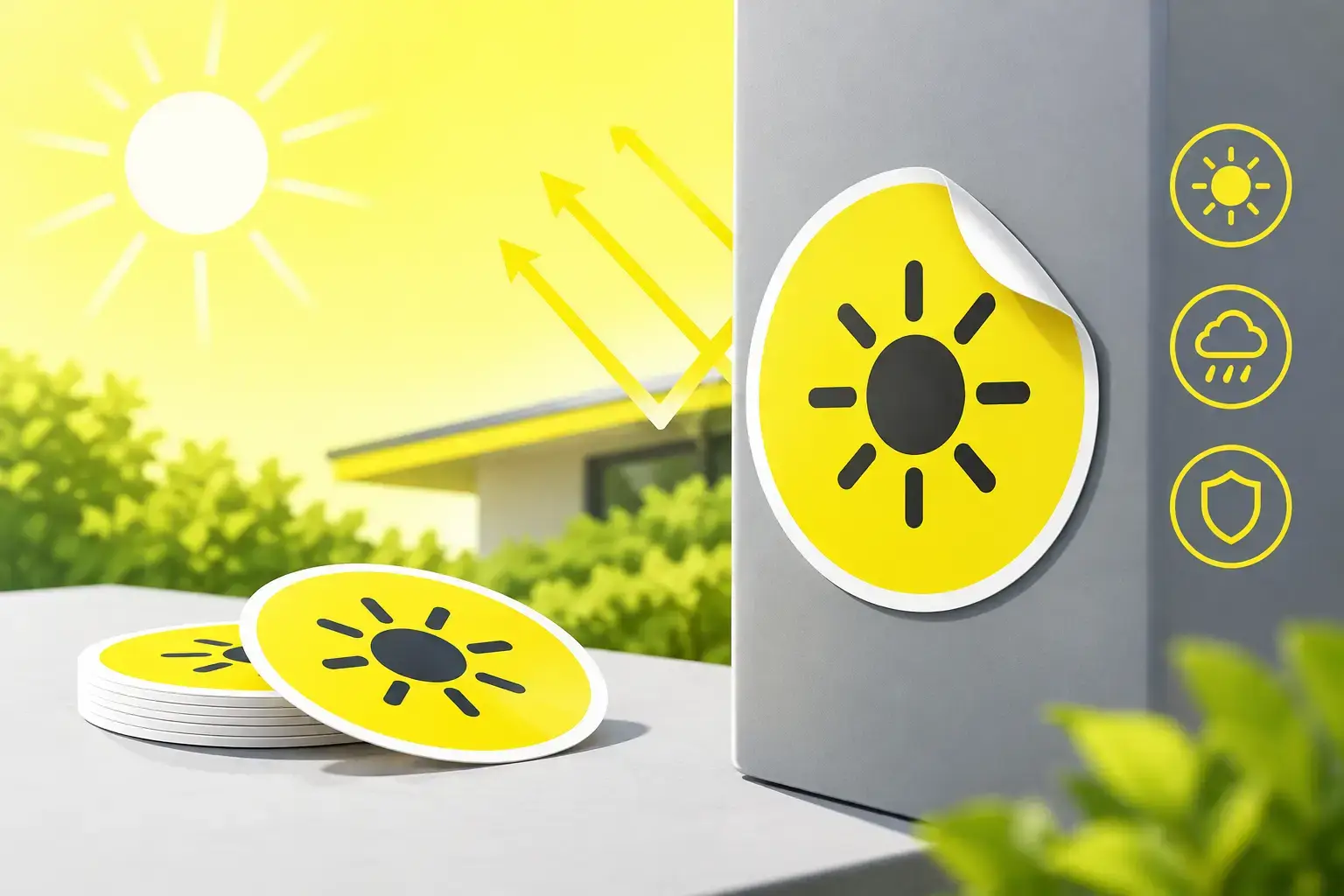
Guide to UV-Resistant Stickers for Outdoor Use
What makes an outdoor sticker perform well
An outdoor sticker performs well when, months after application, it still says what it said on the first day: the brand name is readable, the colors are recognizable, and the edges do not lift. This guide to UV-resistant outdoor stickers helps you choose a solution that is not only eye-catching but also durable in real-world use, whether it is for a shop window, a vehicle, outdoor packaging, event equipment or product labeling.
"Waterproof" and "UV-resistant" are not the same thing. A sticker can withstand rain while the print fades prematurely in sunlight. Likewise, even a strong print will not stay in place if the adhesive does not suit the surface. For outdoor use, you need to consider the material, the surface, the expected lifespan and the conditions of application together.
What makes an outdoor sticker truly UV-resistant?
The UV radiation in sunlight gradually breaks down inks and the structure of the carrier material. The first sign is usually fading, especially with vivid reds, yellows and certain shades of purple. Over a longer period, the film can become brittle and the edges are damaged more easily.
For outdoor purposes, vinyl is therefore needed instead of paper stickers. Vinyl is more flexible, waterproof, and withstands everyday wear well. A clear laminate layer also meaningfully increases the UV resistance of the print. It gives the surface physical protection and reduces the effects of sunlight, moisture, scratches and cleaning.
Outdoor durability does not mean unlimited lifespan. A sticker on a north-facing shop front is under a different load than the decoration on a service vehicle standing in the sun all day. If the sticker will be exposed to constant strong sunshine, frost, salty air or high-pressure washing, it is worth considering this before ordering. You can browse the available options at All products.
Guide to UV-resistant outdoor stickers: material and surface
Choosing the right material is the first business decision. Premium vinyl stickers are a good choice for brands that value a consistent, professional appearance on packaging, shop windows or promotional items. They can be ordered even in small quantities, so for a new product line, a seasonal campaign or a short-run event, you do not have to produce an unnecessarily large stock.
Glossy or matte
The difference between glossy and matte is not only aesthetic. Glossy vinyl gives stronger color and a shiny surface, so it works well on drink bottles, promotional stickers and attention-grabbing graphics. A matte surface is more subdued and reflects less, and it can give a premium feel, for example for cosmetic brands, handmade products or information labels.
When lamination matters
Lamination is especially recommended when the sticker is placed on a frequently touched surface. This includes water bottles, helmets, toolboxes, courier boxes, outdoor signs and vehicles. If the sticker is only used for a short time, for example at a weekend festival or in a seasonal window campaign, the need for lamination depends on the expected mechanical load. On lasting brand elements, however, the extra protection is typically worth it.
The adhesive and the surface are decisive details
Even the best vinyl will not adhere properly to a dusty, greasy, wet or heavily textured surface. Before application, clean the surface and let it dry completely. Smooth glass, varnished metal, hard plastic and painted, intact surfaces generally provide a favorable base.
The challenges are rough walls, untreated wood, porous concrete, silicone-containing plastic, and oily or highly flexible surfaces. On these, the adhesive makes contact over a smaller actual area, or the substrate moves during use. In such cases it is advisable to test with a sample first, especially if you are ordering hundreds of labels or stickers.
Vehicles
On vehicles, the placement location also matters. On flat, less curved areas the sticker follows the surface more easily. On strong curves, recesses or frequently opened door edges, tension can shorten its lifespan. If the car is regularly cleaned with a high-pressure washer, do not let a direct water jet hit the edges of the sticker from close range.
Design for sunlight, not just for the screen
Outdoors, graphics behave differently than on a monitor or an indoor shelf. Sunlight and distance reduce the readability of small details. A good outdoor sticker therefore works with a clear hierarchy: the brand name, the main message or the important pictogram should be recognizable immediately.
Lines that are too thin, very small letters and weak contrast often get lost. Dark text on a dark background, or pale color on a light background, will be less visible in strong light. If a product information label includes mandatory data, it is worth checking separately that the font size is comfortably readable at the actual printed size.
Bleed and safe zone
Bleed and cutting distance are also practical matters. Let the background color or graphic extend beyond the cutting line, so that no disturbing white edge appears on the finished sticker. Keep important text, logos and QR codes at a safe distance from the edges. With a custom die-cut shape this is even more important, because the cut follows the shape of the graphic.
Application: the first 60 seconds matter a lot
Apply the sticker, if possible, in a dry environment with a moderate temperature. In the cold the adhesive bonds more slowly, and on a surface that is too warm it is harder to position the sticker accurately. Do not apply it right after rain, on a damp surface, or on metal standing in hot, blazing sun.
With a larger sticker, first fix only one part, then gradually smooth it on from the center outward. This reduces the chance of air bubbles. A soft, clean tool can be used for smoothing, but avoid sharp objects that could scratch the laminated surface.
A freshly applied sticker needs time for the adhesive to fully develop its grip. If possible, do not wash it, soak it or expose it to extreme weather during the first 24 hours. This is especially important for vehicles, outdoor bins, bottles and frequently handled promotional items.
Which format works for which task?
Individually cut, die-cut stickers are a strong choice as gifts, for promotion, as brand material placed in a parcel, or for reseller sales. The shape can follow the logo or the illustration, so the sticker itself becomes a memorable brand tool.
Kiss-cut stickers left on a sheet are practical when you need to handle several smaller motifs, labels or same-size product markings quickly. A beekeeper, for example, can prepare separate sheets by flavor, vintage or pack size. A cosmetics brand can use the same approach to mark limited-edition scents, campaign messages or package-closing elements.
When choosing, do not look only at the unit price. The time needed for application, the packaging process, the sales experience and how easily the sticker can be handed to a customer all matter. The right format can save a growing brand a lot of manual work.
Checks before ordering
Flawless production starts with a well-prepared file. High-resolution graphics, the right size and a well-thought-out cutting shape reduce the chance of later changes. If you are unsure about the quality of your file, the file check within 24 hours and the optional print proof approval can be a real safety point.
Before ordering, it is worth going through these five questions:
- What surface will the sticker go on, and how smooth or clean is it?
- How much direct sunlight, rain and mechanical stress will it receive?
- Does a glossy or matte finish suit the brand and the use better?
- Is lamination justified for the expected lifespan?
- Do the text, the logo and the cutting shape work well at real size?
In the GetStickerz configurator, by choosing the size, shape, material, finish and quantity, the price becomes transparent immediately. Try it at Configurator. This is especially useful if you would first order a small test batch and then scale up the quantity once the finish has proven itself. If you have questions, you can reach us at Contact.
Conclusion
A good outdoor sticker does not simply withstand the weather. The right vinyl, lamination, well-thought-out graphics and clean application together make sure your brand stays tidy and recognizable even when conditions are no longer ideal.